Perthshire’s Treasures
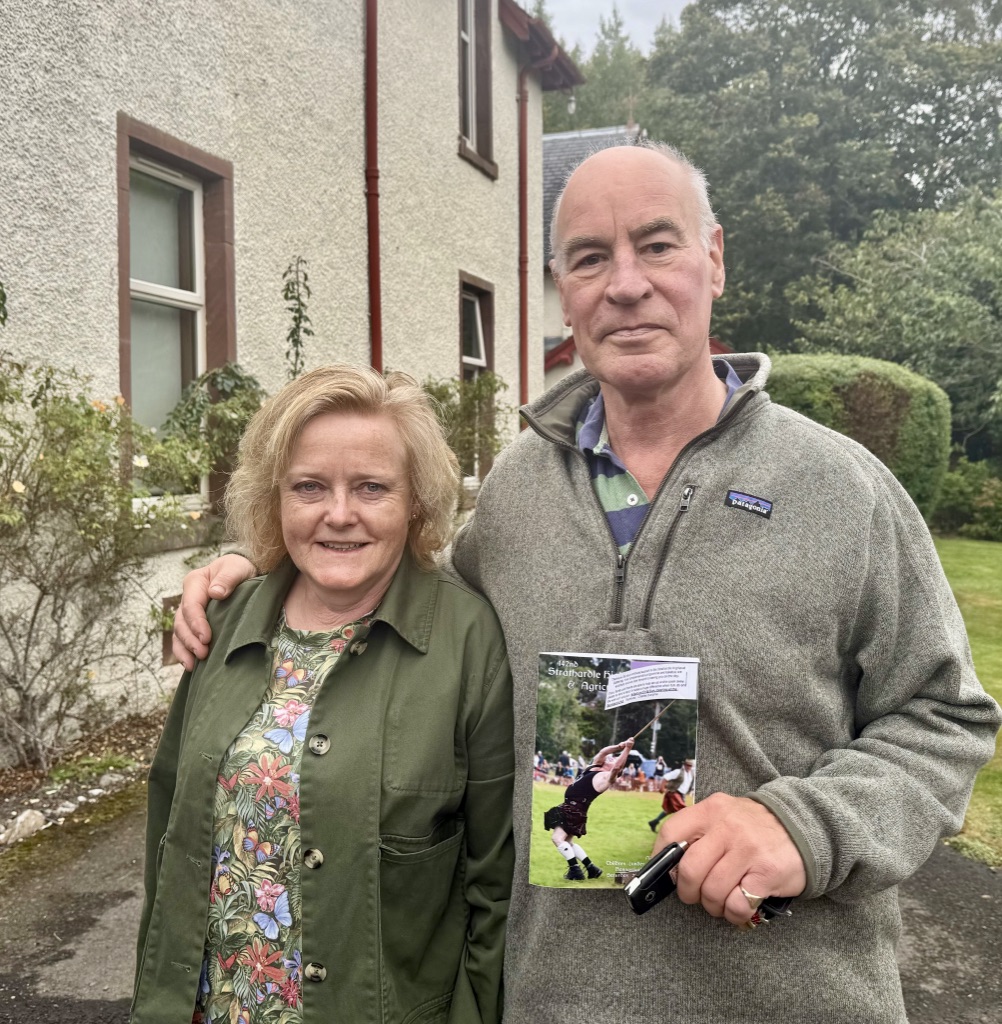
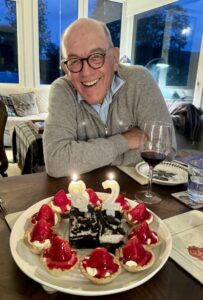 The word treasure names something of great worth, like my marriage to Steve, whose August 22 birthday we celebrated soon after we reached the home of our treasured friends, Mary and Geoffrey Thomson. The Thomsons were our landlords in Dornoch and our hosts at Alltreoch, their home in Perthshire, three hours south, on the A924. It’s close to both the Highlands and to Cairngorms National Park. In many ways it was a repeat of our visit there in 2022, but we we also met new people from London–Anthony, Rosemary, and Mary’s niece Annie–and had new experiences. We saw and admired Geoffrey and Mary’s entries in the Home Industry competition, thrilled to the marching Pipe Band, marveled over the parade of farm vehicles and historic cars, and empathized with a long series of Tugs of War! Here’s an album of narrated photos taken August 23 at the wonderful 142nd Strathardle Highland Games.
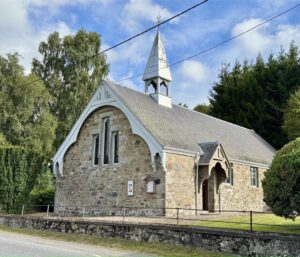
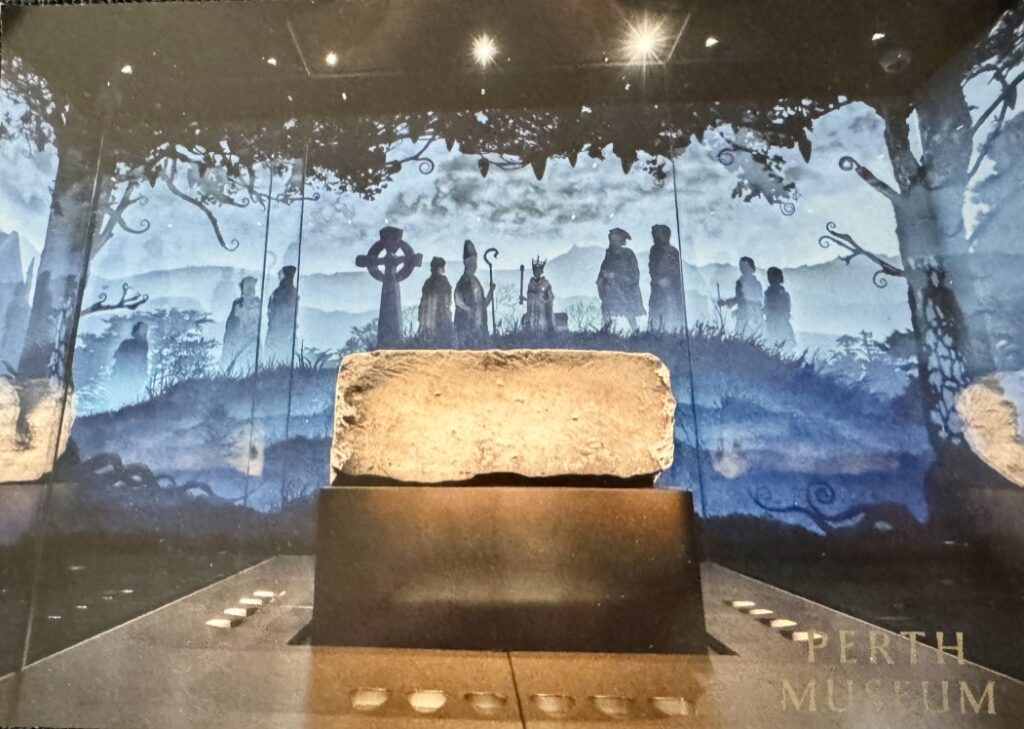
After Mary and I attended the Sunday morning service at this lovely church, we saw Geoffrey and Steve off for the “Broken Club” Tournament at Blairgowrie Country Club. Then we drove 40 minutes to meet niece Annie at the Perth train station. After a lovely outdoor lunch, we three visited the Perth Museum. We had hoped to see the famous Stone of Destiny, also known as the Stone of Scone, but an earlier incident involving the Stone of Destiny was under investigation and that exhibit was closed. At least I got this postcard!
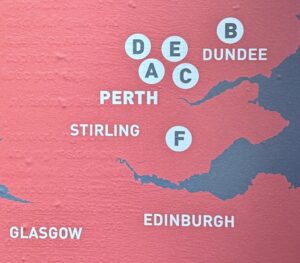 Instead, we were admitted free of charge to a fascinating exhibit about how Shakespeare’s play, Macbeth, is related to Perthshire. This map pinpoints six places that are mentioned in the play: A = Dunkeld Cathedral, King Duncan’s seat of power. In Macbeth’s time, it was not yet a Cathedral, but an Abbey founded as early as the 7th century. B = Glamis Castle, where Malcolm II was killed in 1034. C + Moot Hill, Scone, the place where Scottish kings were crowned at the Stone of Destiny. It’s unclear if Macbeth was crowned there, but his stepson/successor Lulach was in 105
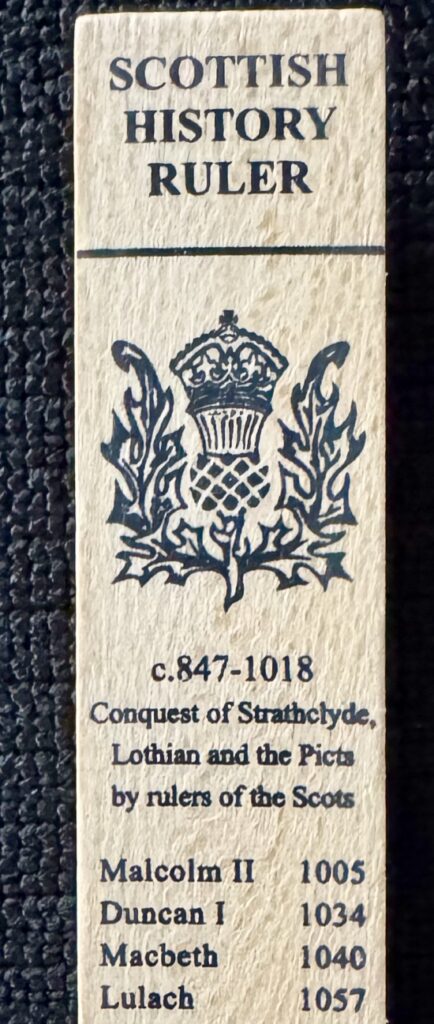 Mary bought me a ruler to help me keep track of Scottish Rulers. Continuing with the map, D = Birnam Wood is a reference to the “moving forest” foretold by the Witches. Malcolm’s soldiers cut oak tree branches to camouflage their attack on E = Dunsinane Hill. In the play, the three witches prophesise that Macbeth will remain invincible “until Great Birnam Wood to high Dunsinane Hill shall come.” Macbeth’s forces indeed lost the battle to English forces led by Seward, Earl of Northumbria, in support of his nephew, the future Malcolml III. F = Loch Leven Priory. Macbeth’s 17-year reign left little surviving evidence, but unlike the play, it is believed to have been largely peaceful. After killing Duncan I in 1040, Macbeth married his widow Gruoch and they ruled together. The few surviving records include charters giving property to Loch Leven Priory. [While I pondered all this history, Mary and her niece Annie got acquainted with one of the Museum’s guides who, like Annie, had sung the previous night at the Festival in Edinburgh, one of my all-time favorite cities.]
But wait! There’s another 21 centimeters (8-1/2 inches) left on this ruler! The rest takes us through 1707 (24 cm) when Scotland became part of the United Kingdom all the way to now, with King Charles III on the throne. After driving through Perthshire’s hills and woods, I can now re-read Macbeth or see the play with a more vivid understanding of time and place.
Thank you, Mary and Geoffrey, for sharing the treasures of Perthshire with us!
Leave a Reply