Baltic Sea, Part 2
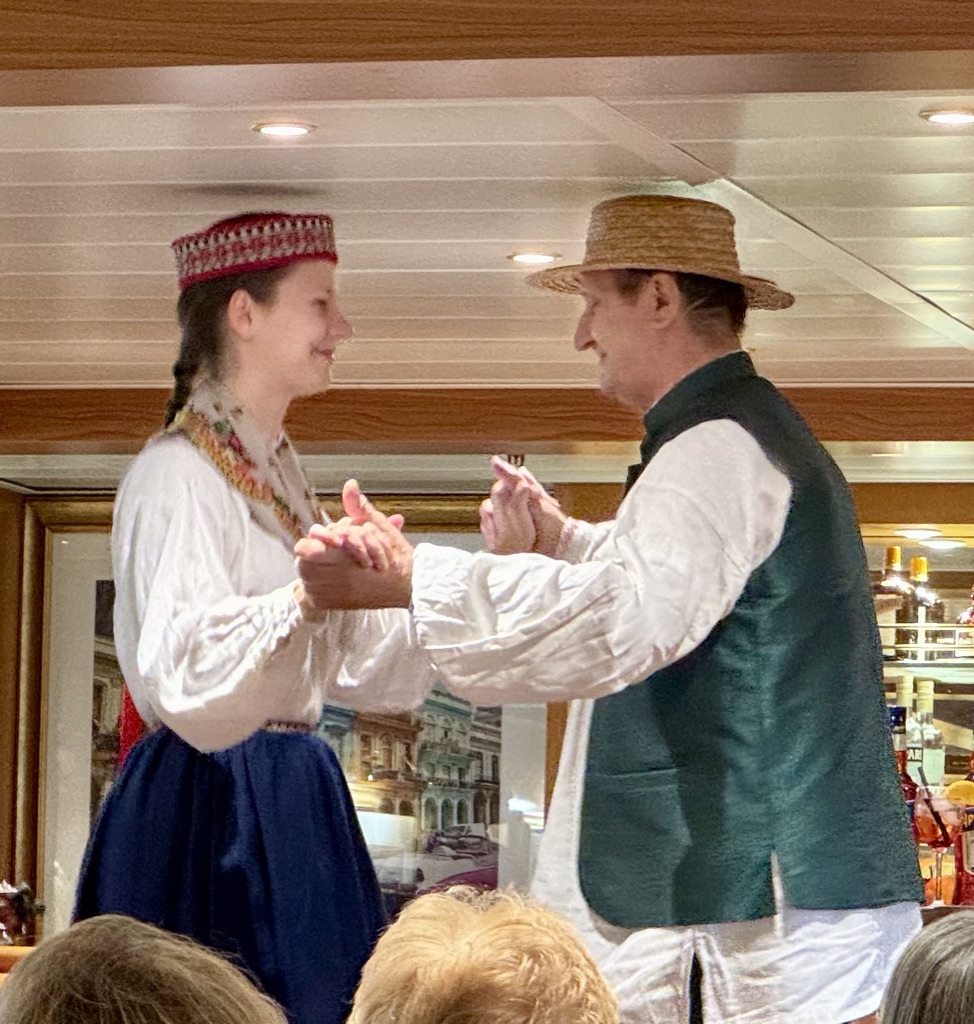
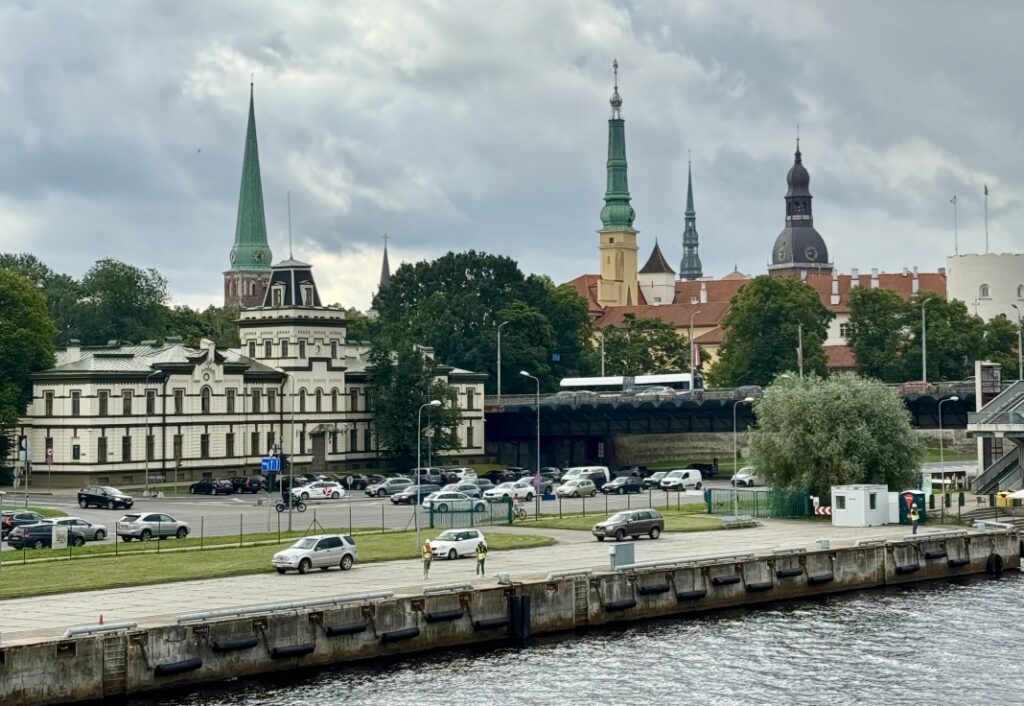 Following visits to four ports described in Baltic Sea, Part 1, we docked at Riga Latvia to discover a prosperous, well-preserved city. Several whimsical cat sculptures paid homage to Flow, an animated movie about cats in a flood that won Latvia its first Academy Award in 2025. Also setting this city apart was an enormous central market, with a bewildering array of fresh food displayed inside hangars that had been used a hundred years ago for German Zeppelins. This Riga album includes the Old City, the central market, and some interesting sites we encountered in the main square. That evening we were entertained by Latvian folk dancers and msicians.
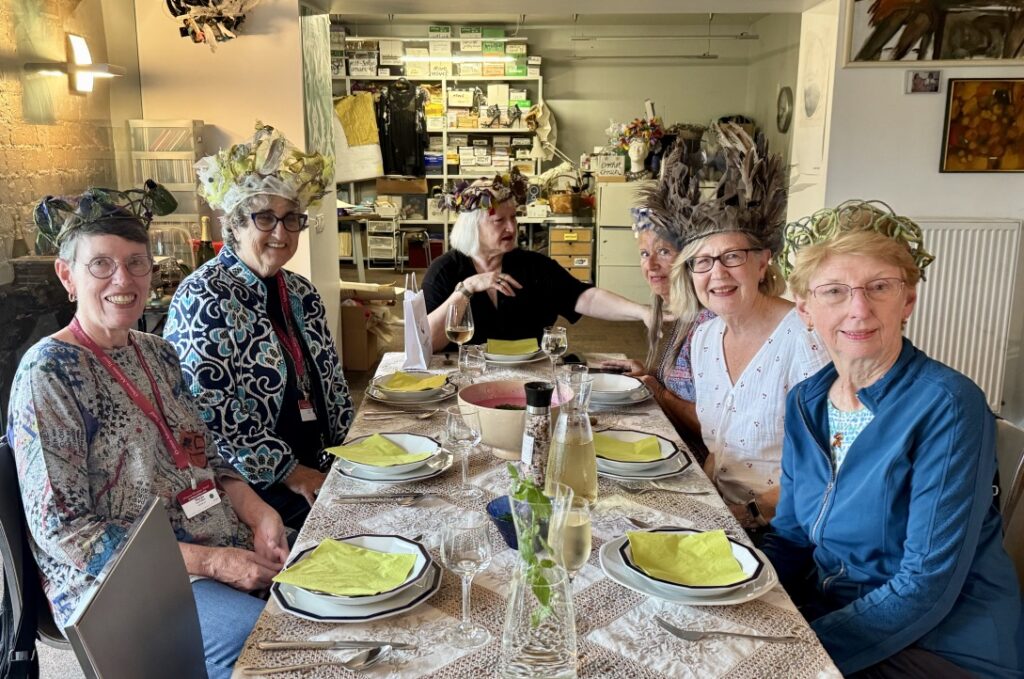
 The next day was rainy. Some of us went by bus through the countryside and toured the opulent Rundale Castle, constructed in the 18th century by the designer of the Winter Palace in St. Petersburg. In this Rundale album, you can see its magnificence. Dinner was at the home of Brigida Stroda, a local designer who speaks English and enjoys meeting people. Here are my five companions wearing crowns she had created. She also created delicious beet soup and an innovative salad. We had a great time.
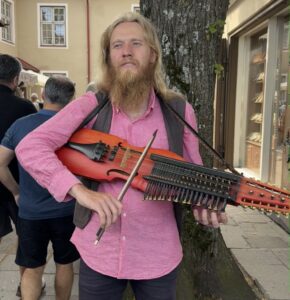 Tallinn, Estonia. “Tallinn is a wonderfully preserved city of the old Hanseatic League,” stated our tour booklet. “This ancient walled port is a UNESCO World Heritage Site filled with remarkable fortresses, castles, and cathedrals, complete with moats and drawbridges.” You will see these features in my Tallinn Album, which includes a photo of Alex Skalit and his Nyckelharpa, an instrument new to me. I loved hearing him play familiar classics skillfully and expressively, so of course, I bought his album to play at home.
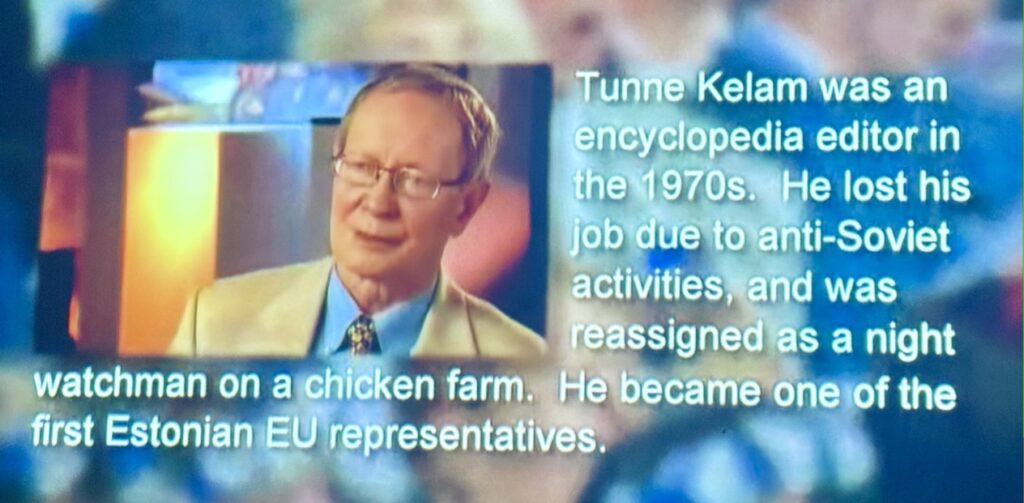
My son David has kept up with a particularly bright classmate from Estonia who was in his Kindergarten class in Arlington, Virginia. When Kristopher popped up on Facebook four decades later, I friended him and learned that his mother had moved back to Estonia and become a member of Parliament. On the ship we saw a movie about the Baltic Singing Revolution, which occurred from 1987-91. It included these photos of Mari-Ann Kelam and her husband, Tunne Kelam. What a joy to see their role in making Estonia the poster child for peaceful emergence from the Soviet era. 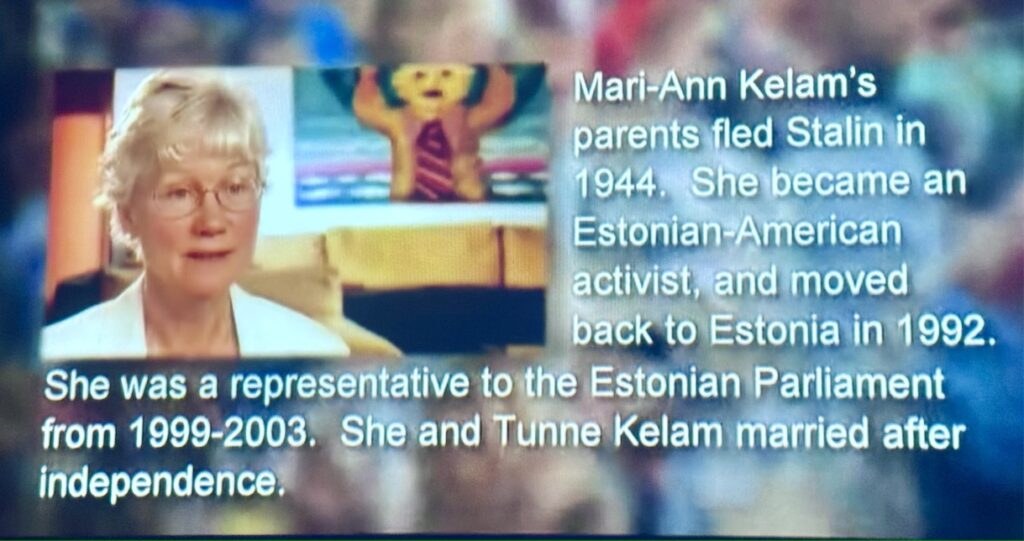
On a map, you’ll see that from Estonia the Baltic Sea reaches all the way to St. Petersburg, Russia. Estonia was controlled by the USSR from 1939 until they declared their independence on August 22, 1991. In 1988, in reaction to the environmental impact of Soviet plans to establish phosphorite mines in the Virumaa region, Estonians expressed their resistance through singing! “Five Patriotic Songs” by Alo Mattiisen premiered at a nearby Festival in May 1988. In June, the Old Town Festival was held in Tallinn; afterwards the participants moved to the Song Festival Grounds and started to sing patriotic songs together spontaneously.
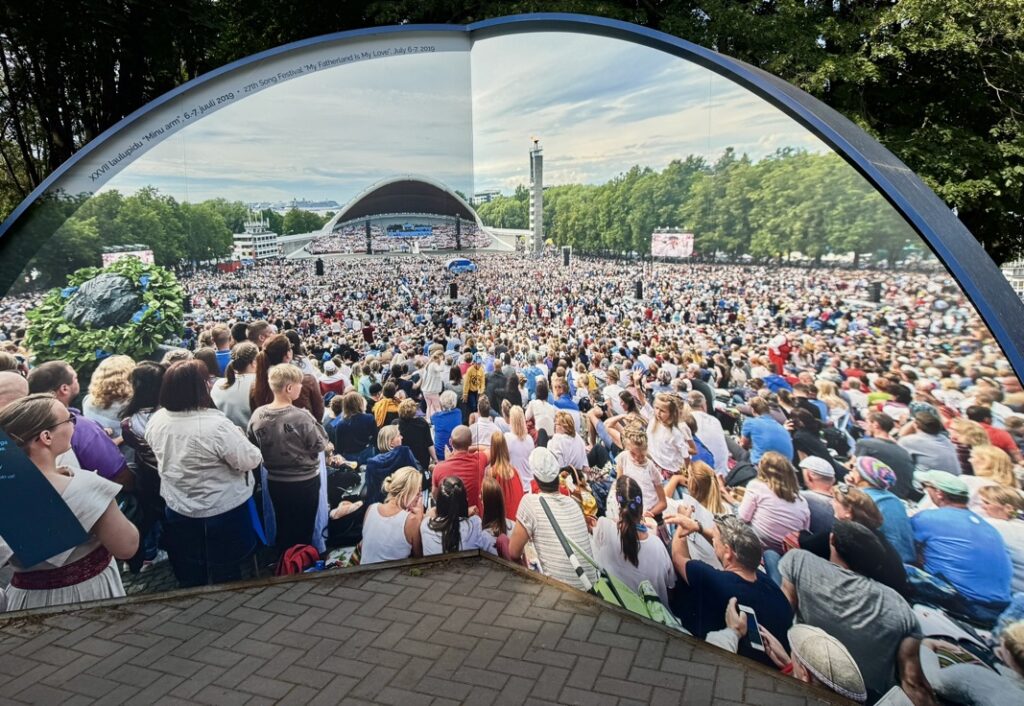
The Song Festival Grounds in Tallinn were under renovation this July, but this large picture on display gave us the idea of what it was like in 1988. On 23 August 1989, the Baltic Way, a human chain of two million people, stretched from Tallinn, Estonia to Vilnius, Lithuania. Two years later Estonia was free at last.
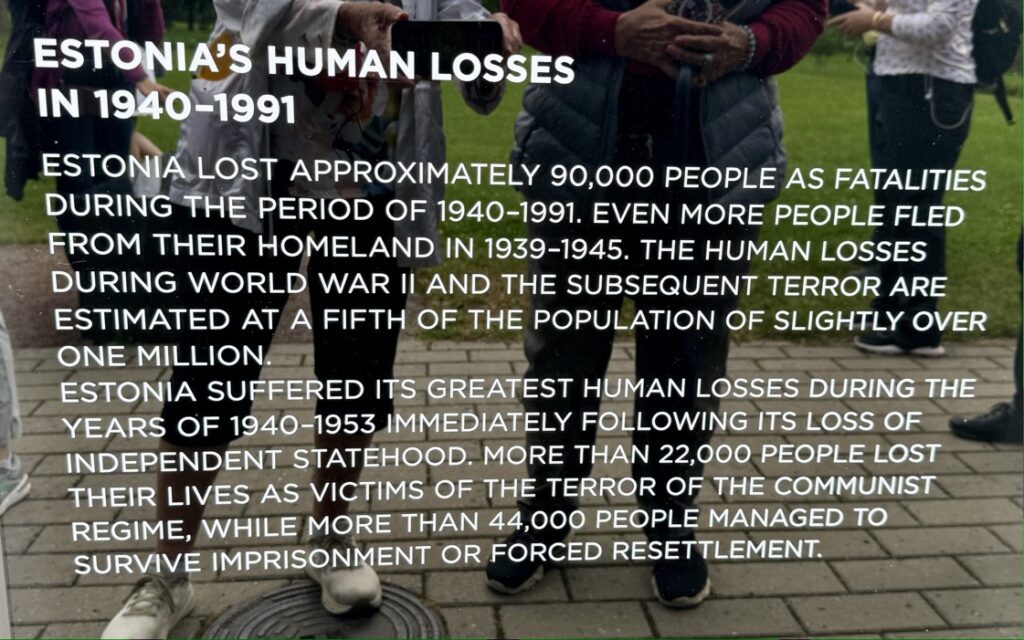
 Estonians were so glad to be out from under the Soviets that they built a Memorial to Victims of Communism, as shown in this photo album. It is somewhat like the Vietnam Memorial in Washington, DC, but more explicit about the cruelties they endured.
From Tallinn, it was a short voyage to Helsinki, Finland. Our first stop there was an elaborate monument to Finnish composer Jean Sibelius. My heart was singing his famous hymn, Finlandia,
This is my song, O God of all the nations,A song of peace for lands afar and mine.This is my home, the country where my heart is,Here are my hopes, my dreams, my holy shrine.But other hearts in other lands are beating,With hopes and dreams as true and high as mine.My country’s skies are bluer than the ocean,And sunlight beams on clover leaf and pine.But other lands have sunlight too, and clover,And skies are everywhere as blue as mine.O hear my song, thou God of all the nations,A song of peace for their land and for mine.
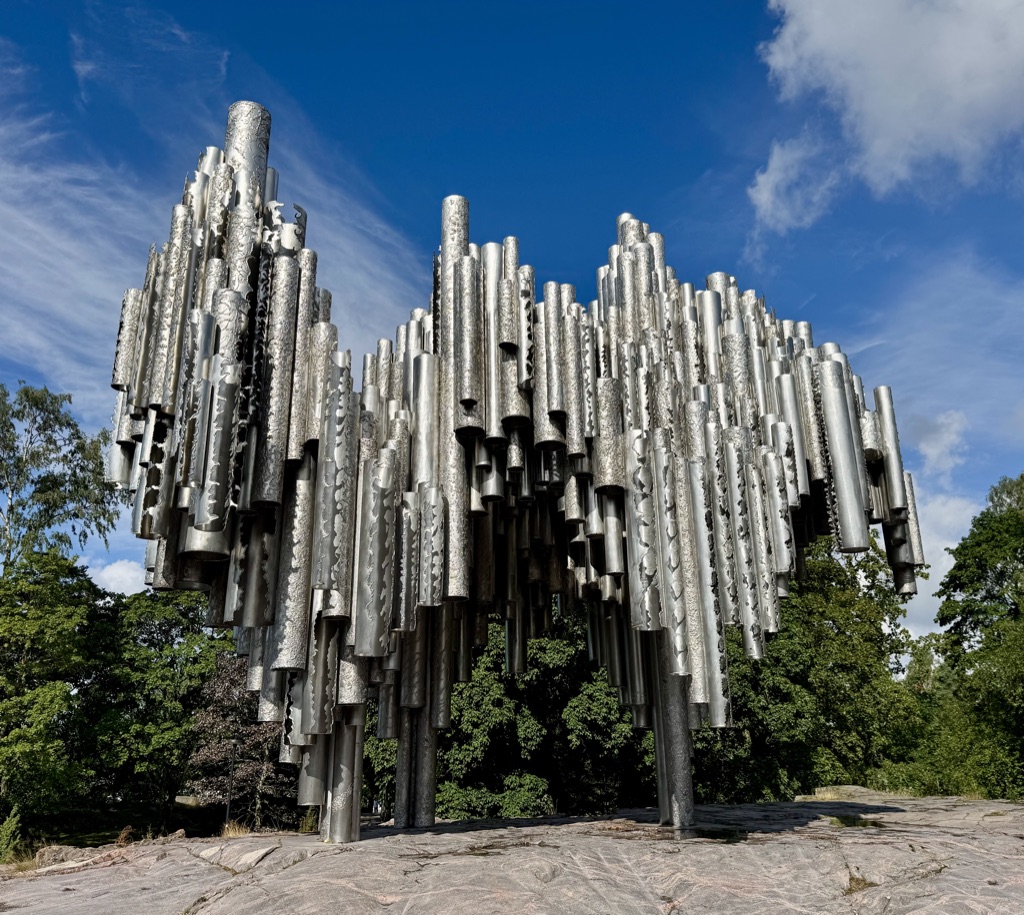
We found Helsinki to be another prosperous city. Among it’s many fine shops, I headed for Marimekko, whose designs I have always admired in Lilli’s home. One of the best parts of the whole trip was seeing Oodi, Helsinki’s amazing Public Library, “the living room of the city.” You’ll see Oodi, Icebreakers, churches, and even a Ferris Wheel in this Helsinki Album.
August 2, our final night on the Clio, was the Captain’s Farewell Dinner and it was luscious. Then the Clio cruised all night toward our last port, Stockholm Sweden.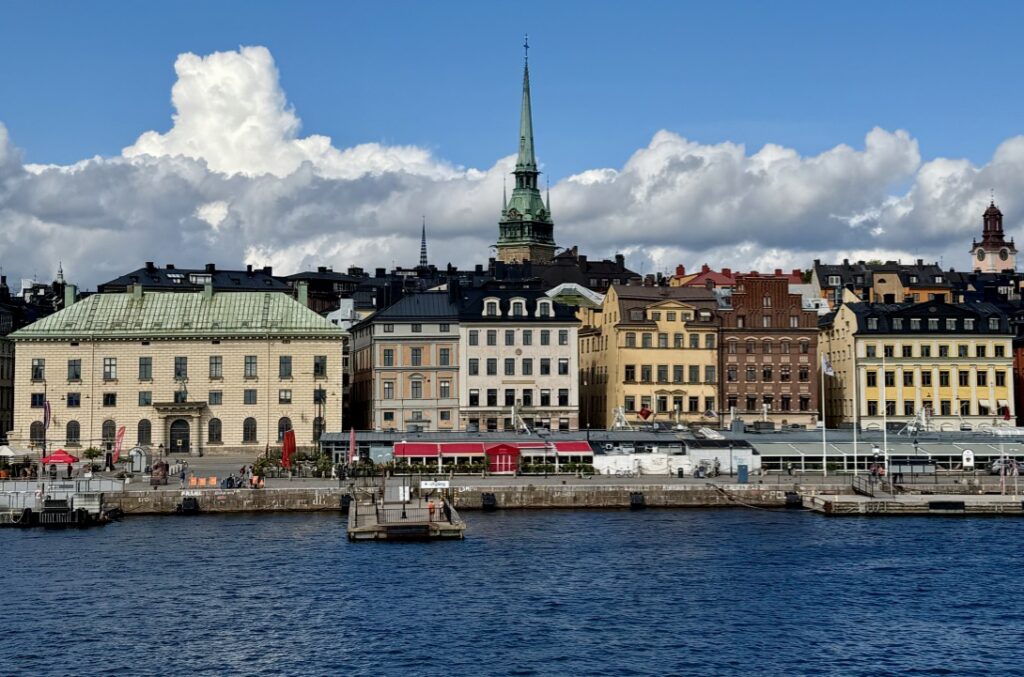 After breakfast on August 3, we climbed to MV Clio’s Top Deck and enjoyed a leisurely approach through many lovely islands to Stockholm. Once at the port, we disembarked, transfered to a hotel, and had time to explore this beautiful city, as you will see in my Stockholm photo album, which includes a photo of our group near the Nobel Prize Museum. That evening we bid farewell to those we had come to appreciate– our fellow explorers and our wonderful guides. I trust that my two posts about this trip will aid me in remembering precious places and people. I will continue to ponder the history and politics of this region. From Vikings and Christians to Communists and Singers, the Baltic Sea is a fascinating part of our world.
Leave a Reply