Lisbon to Casablanca
On April 25 I joined my friend Elizabeth Vickrey Lodal in Lisbon for a cruise to Spain and three countries we’d never seen before: Portugal, Gibraltar UK, and Morocco. it was Elizabeth who suggested that we try a 10-day trip with the “Traveling Owls” of Rice University and 155 alumni from Duke, UCLA, Naval Academy and several others. Sounded like fun to me!
Our History. Elizabeth and I, both from small towns in West Texas, met in 1962 as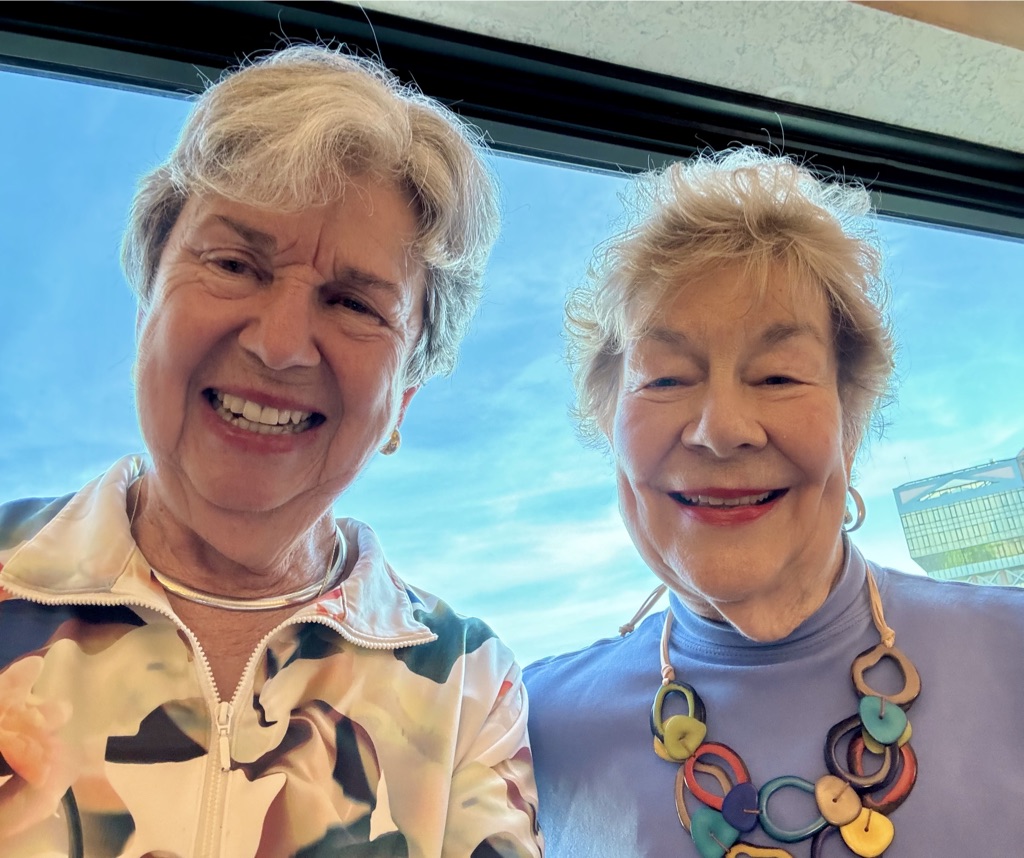 new freshmen at Rice University and soon discovered that we shared a love for music, art, and history. Our time at Rice was truly blessed with both learning and falling in love–she with Jan, and I, with Steve. Soon after earning our Bachelors in History in 1966, we married our Rice sweethearts.and headed east. By 1968 we had both settled in the Washington DC area. She earned her Masters in Secondary School Administration and began to make her mark as an outstanding principal in Fairfax County Middle and High Schools.
After three years as a researcher in the DC office of McKinsey & Co. management consultants, I moved with Steve to Arlington VA before giving birth to Lilli in 1971 and David in 1973. Eric Lodal arrived in 1976. Elizabeth and Jan invited us to Cherrydale United Methodist Church, where we soon became actively involved. Our daughter Shelby was born in 1978; Kirsten Lodal was born in 1979. The Lodals moved to a larger house in McLean; we stayed in Arlington, where my home Piano Studio began to grow. Our two families stayed in close touch.
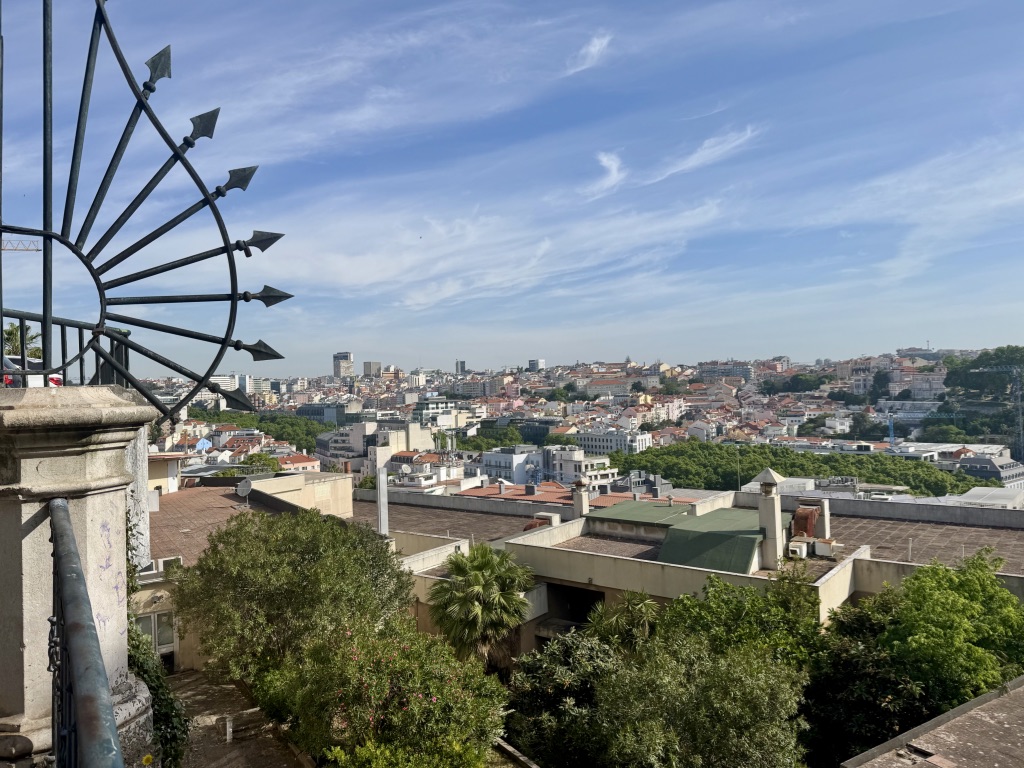
So, now, Lisbon! On Sunday, April 26, our first outing was a bus ride down Avenida da Liberdade, an elegant boulevard inspired by Paris’s Champs-Elysées. After passing the statue of the Marquis de Pombal, the statesman who rebuilt Lisbon after a massive earthquake in 1755, we walked to Miradouro de San Pedro de Alcântara for a stunning panoramic view.
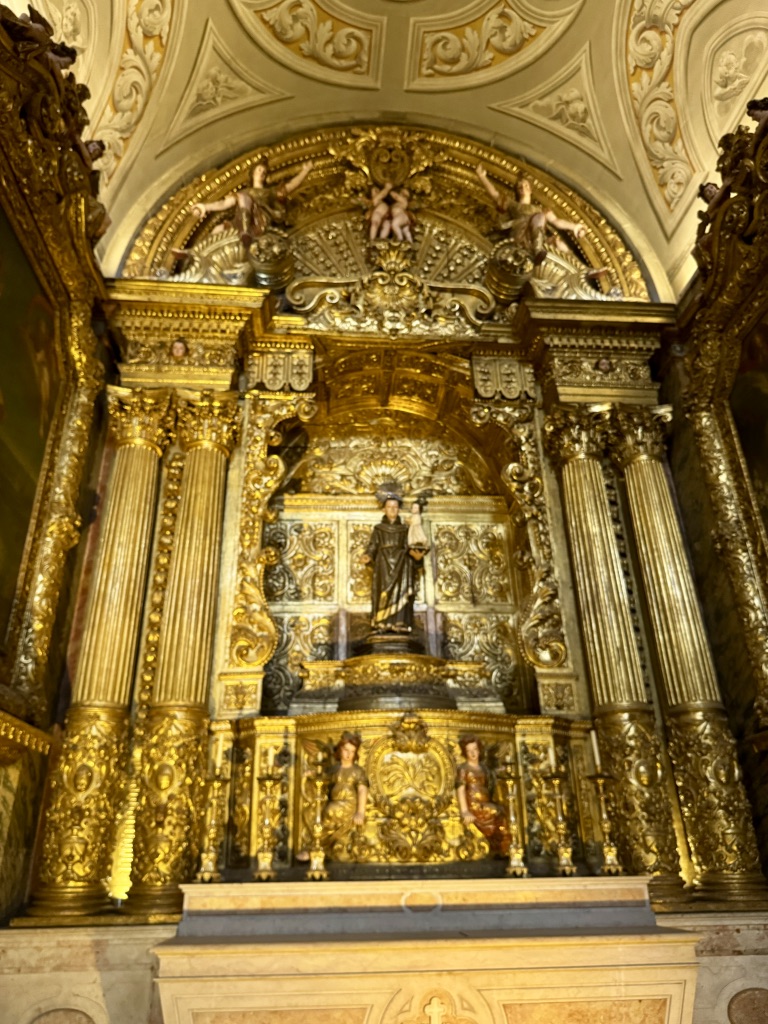 We continued on to the Igreja de São Roque, a large church known for its opulent Baroque chapels, including the Chapel of Saint John the Baptist, known as the most expensive in Europe. I think I know where they got all that gold for this altar.
That afternoon we visited the roof of a shopping center near our Hotel Dom Pedro to see more views of the Tagus River and its bridges. This album, contains 44 more photos of what we saw in Lisbon and from above on our first day. In the evening, we joined 60 or so members of the Pre-Trip group for a delicious dinner with Fado guitarists and singers creating haunting melodies. Learn about Fado from Rick Steves!
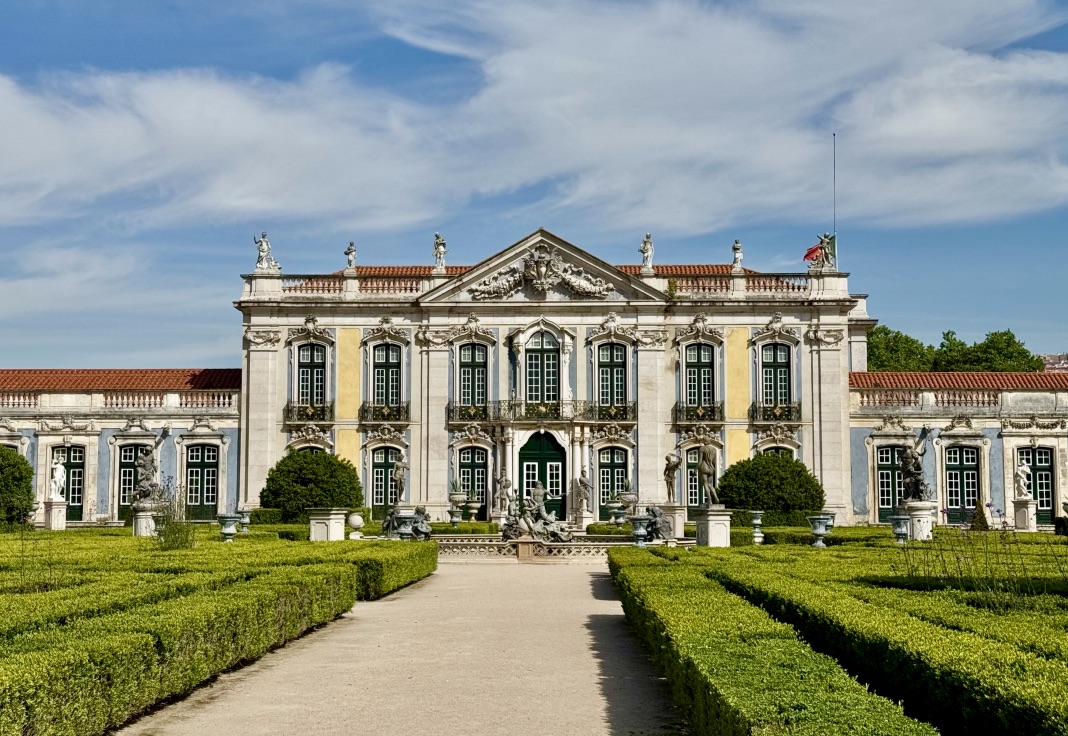
To see more about how the royal family of Spain live, on Monday the 27th, we traveled northwest an hour to the former royal residence of Queluz, known as the Portuguese Versailles with its lovely gardens. We missed getting to drink the kind of chocolate the royals liked, but we did see a peacock spread out his tail. See that and more in this album.
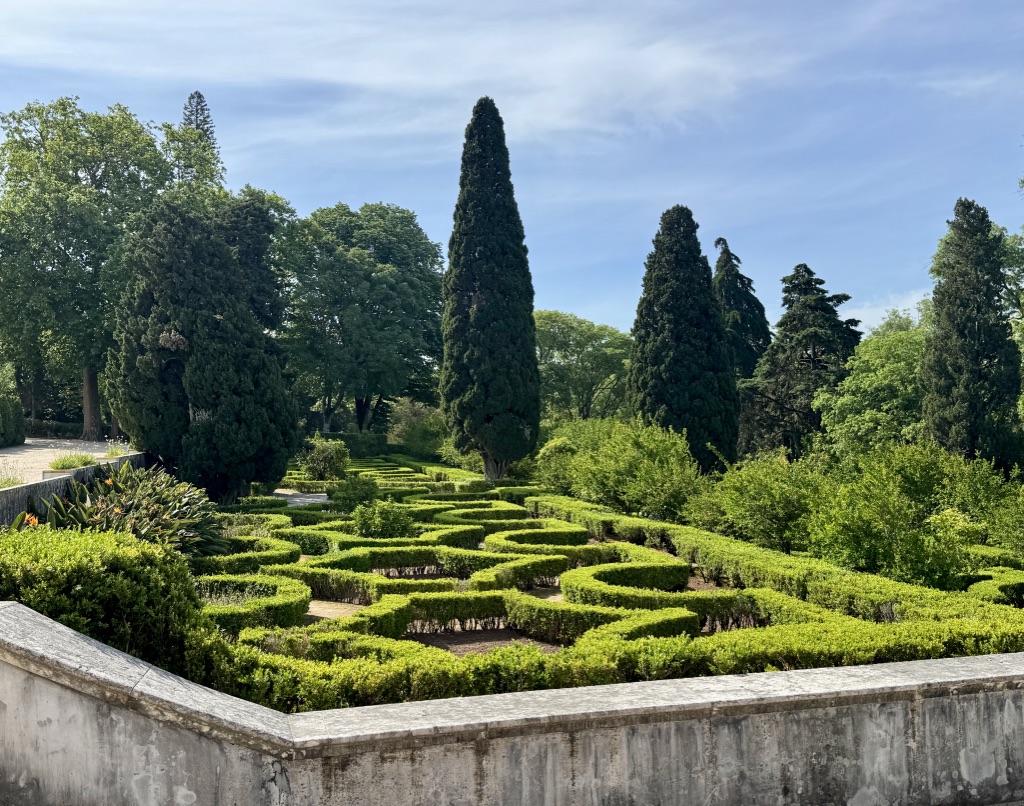
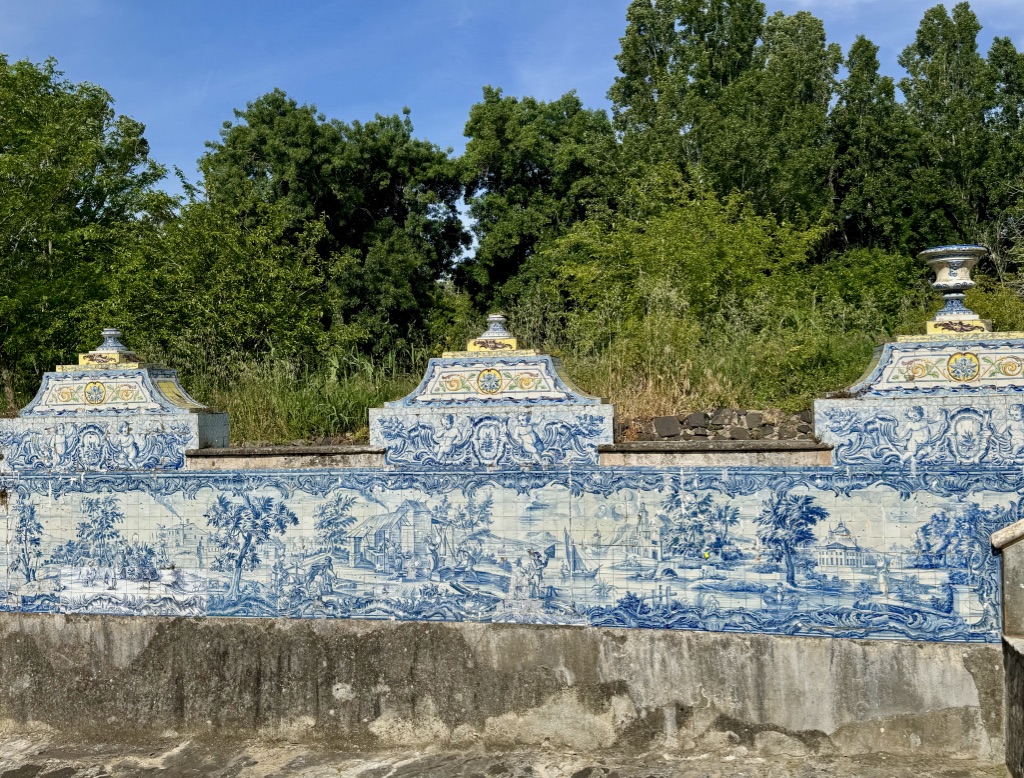
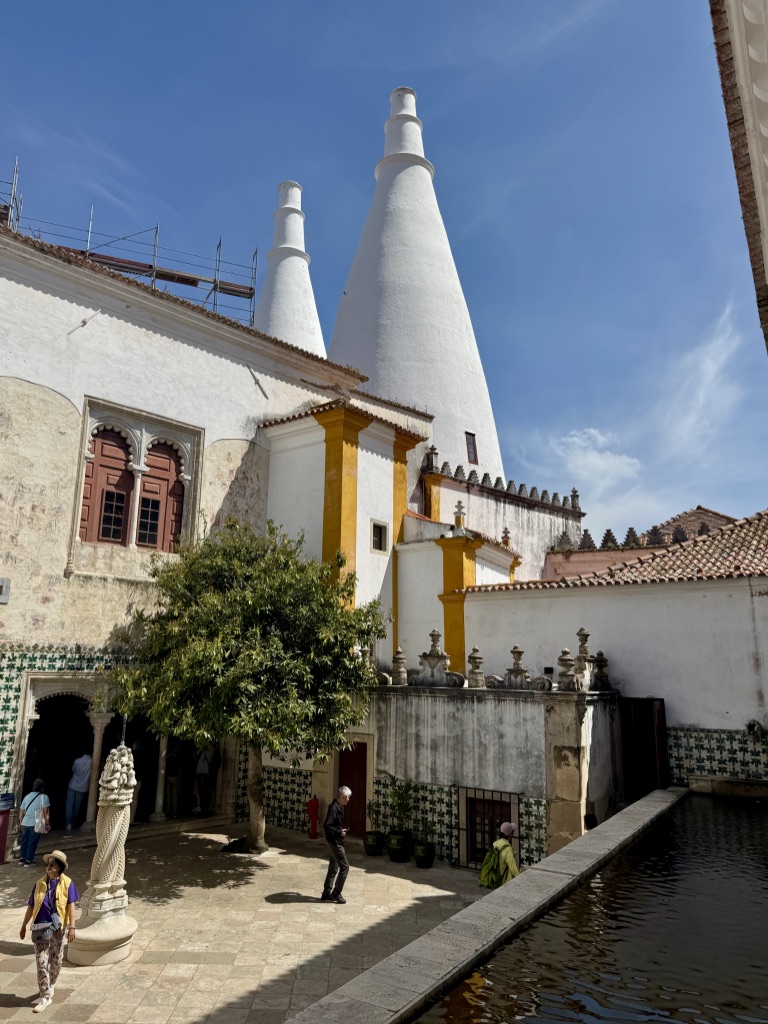
From Queluz we drove farther west to the Royal Palace in Sintra, an older, rather more casual and popular place. It is known for its white conical chimneys; we saw the kitchen downstairs from which they arose. Here are more photos with explanations of the feudal epoch when it was first built. After a long bus ride back to Lisbon, we boarded the World Voyager cruise ship that would be our home for the rest of the trip.

Elizabeth and I especially enjoyed the lectures on Tuesday, April 28, that kept us busy thinking while the World Voyager traveled south many miles through the Atlantic Ocean to Portimäo and Lagos on Portugal’s Algarve Coast.
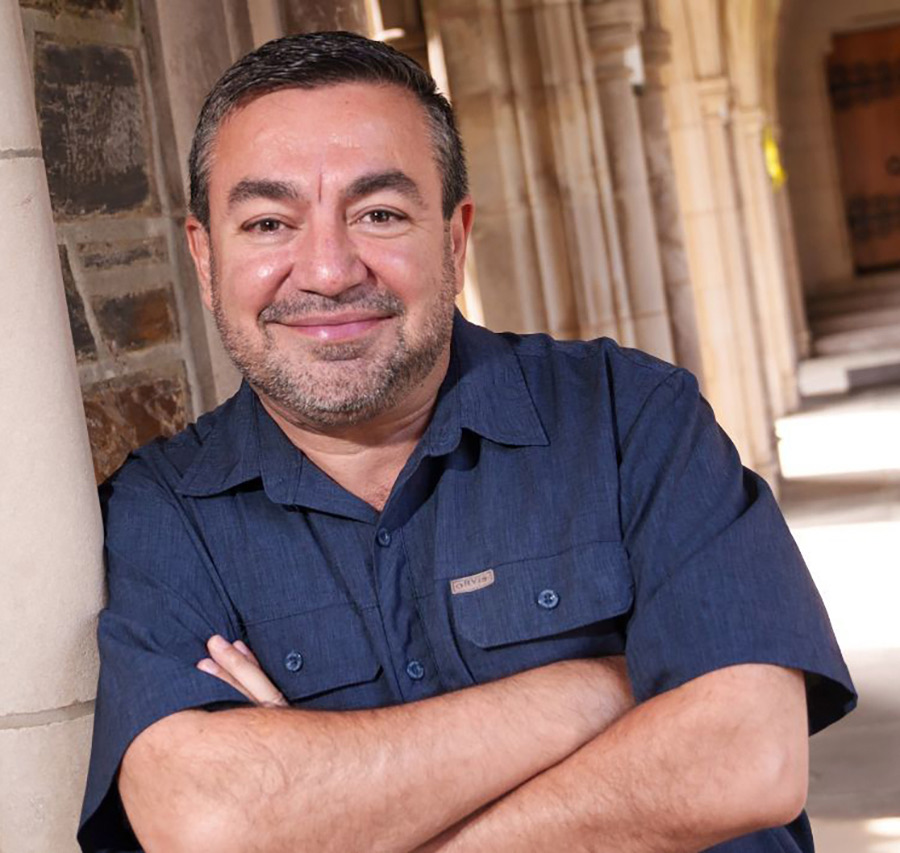 First we heard Abdullah Antepli, a professor at Duke University Divinity School, who was recently named President of the Rothko Chapel in Houston, an institution dedicated to interfaith dialogue, social justice and the arts. He and his wife plan to move to Houston soon. Born in Turkey, Abdullah introduced us to the diversity and dynamism of the world’s 1.8 billion Muslims. From Sufi mysticism to modern reform movements, from women’s leadership to digital-age theology, I learned new respect for Muslims and the cultures they had inspired that we would soon encounter.
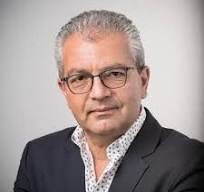 The next lecture was by Ali Behdad , Professor of English and Comparative Literature at the University of California, Los Angeles, who presented the cultural legacy of Al-Andalus, a period of intellectual and artistic flourishing in southern Spain. It began in the 8th century when Abd al-Rahman, an exile from Damascus, Syria, led the establishment of La Convivencia or “living together.” It was a rare time when Muslims, Jews and Christians coexisted harmoniously. One example was the Syrians contributing their irrigation expertise for growing gardens, making possible the success of Alhambra, which started in 936 AD.
 Another example Behdad presented was Maimonides, a Sephardic Jew who was born in Andalucia in 1138. Exiled with his family ten years later, he eventually settled in Egypt, where he became renowned as an astromer, philosopher and physician—even being appointed to serve as personal physician to Saladin of the Ayyubid Sultanate. Maimonides Hospital in Brooklyn NY is named for him.
After arriving in Portimao, Portugal and having lunch, we were driven 40 minutes to Lagos, which served as a key departure point for explorers in the Age of Discovery (1394–1460), spearheaded by Prince Henry the Navigator. We took a walking tour pictured in this album. I later discovered that Prince Henry did not actually go to sea on voyages of exploration; his role was that of a patron, planner, and sponsor, not a sailor, and he rarely left mainland Portugal. I also learned that Lagos was also an important port in the transatlantic slave trade.
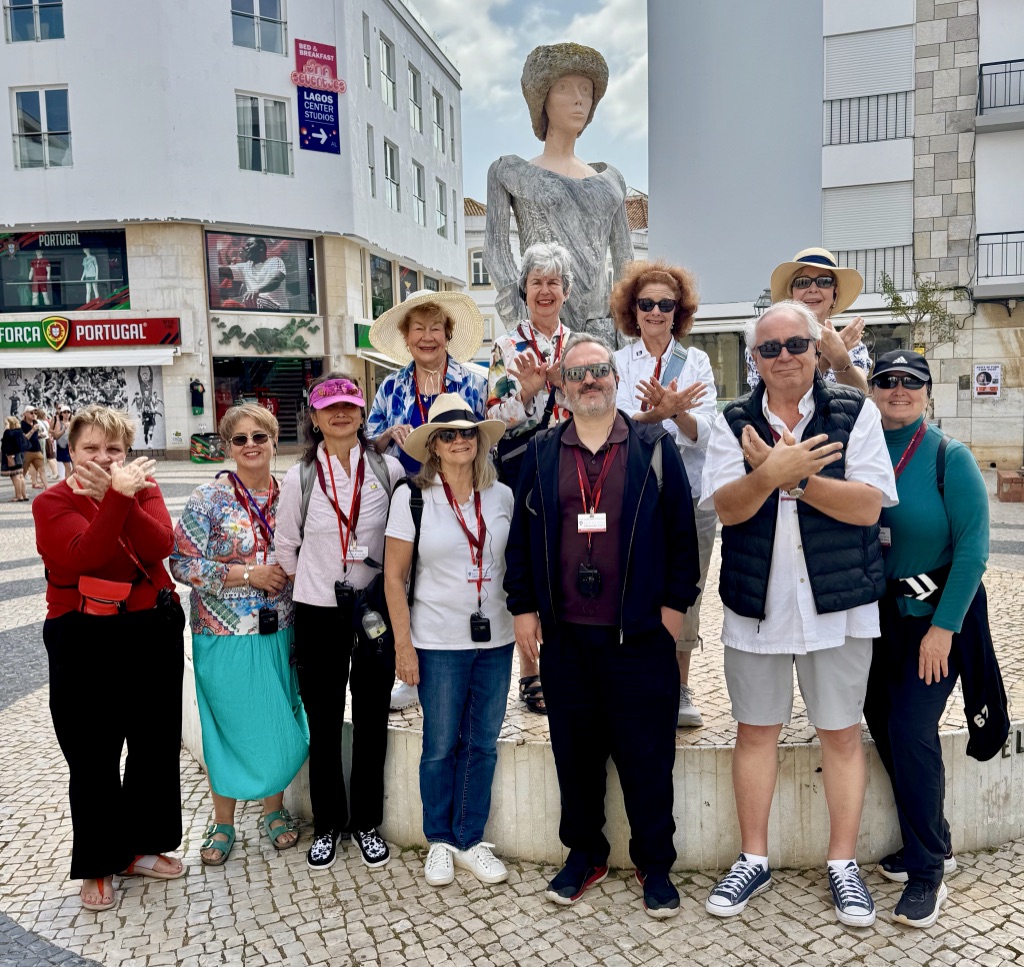
The “Traveling Rice Owls” paused in Lagos to take a photo of our group with wings flapping in front of a statue that is a modern bronze sculpture of King Sebastian I. Created by artist João Cutileiro in 1973, it depicts the young, ill-fated king in oversized armor, representing his reckless 1578 campaign in Morocco. Right front are two Rice Professors, Juan José Castellon, Architecture, and Arthur Gottschalk, Music.
From Portimão, on April 29, our ship sailed due east on the Guadalquivir River towards Seville Spain, the heart of Andalusia. On our way, we heard Part 2 of Abdullah Antepli’s lecture the day before, titled “Engaging with Islam and Muslims in the 21st Century.” I appreciated his view that Islam’s past and present offer valuable lessons for coexistence, ethical leadership, and cross-cultural understanding in today’s interconnected world.
 Next, Smadar Lavie, born in Jerusalem and Professor Emerita of Cultural Anthropology at UC Davis, delivered a lecture entitled “Memory, Myth, and Shared Life in al-Andalus: Jews, Muslims, Christians, and late 20th Century Dreams of Palestine/Israel Peace.” I learned more about Al-Andalus, the Muslim-ruled territory of the Iberian Peninsula from the Umayyad (from Arabia) conquest in 711 to the fall of the Nasrid Emirate of Granada in 1492. Those 781 years were characterized by significant cultural, scientific, and agricultural advancements, fostering a relatively tolerant, multicultural society under various Islamic dynasties. While Jews lived as protected minorities under Islamic rule in medieval Iberia, cooperation occurred within clearly defined legal and social boundaries. Lavie traced how this Iberian legacy re-emerged in late 20th-century dialogues among Israeli, Palestinian and international intellectuals, where a shared past became a framework for imagining political possibility. I can only hope that those possibilities still exist!
Wednesday A;pril 29, was a day at sea. Some of our fellow travelers enjoyed the scenery from the deck or swam in the pool. I elected to play some piano pieces by Spanish composers that I had brought along. Here is a piece I learned when I was just 15. It was especially composed for the first performance of Goyescas at the Metropolitan Opera House in New York on January 28, 1916 and was not part of the original score.
Click highlighted links to hear Playera by Enrique Granados and Tango in D by Isaac Albeniz.
 Afterward we heard Juan José Castellón, Professor of Architecture at Rice University, present “Lessons from la Alhambra: Tradition and Innovation in Al-Andalus.” again referring to the period from 711 to 1492.He demonstrated why La Alhambra in Granada and the Mezquita in Cordoba stand as remarkable masterpieces, showcasing the ingenuity and artistic brilliance of Arabic and Islamic culture. Elizabeth and I believed this was the best of all the lectures–well-thought-out and well-delivered. We were proud that a Rice Professor held his own in a talented group of experts. We were glad to know that Castellón focuses on designing sustainable buildings and environmentally responsive cities. He co-founded xmade, a collaborative international practice based in Basel and Barcelona, his home town.
On April 30 we awakened to a beautiful day in Seville, Spain. There we visited the magnificent Alcázar, a UNESCO World Heritage Site and a stunning palace with intricate Mudejar designs and lush gardens. Originally built as a Moorish fortress in the 10th century, it was later expanded by Christian rulers. See this album for 37 photos and notes that I took. 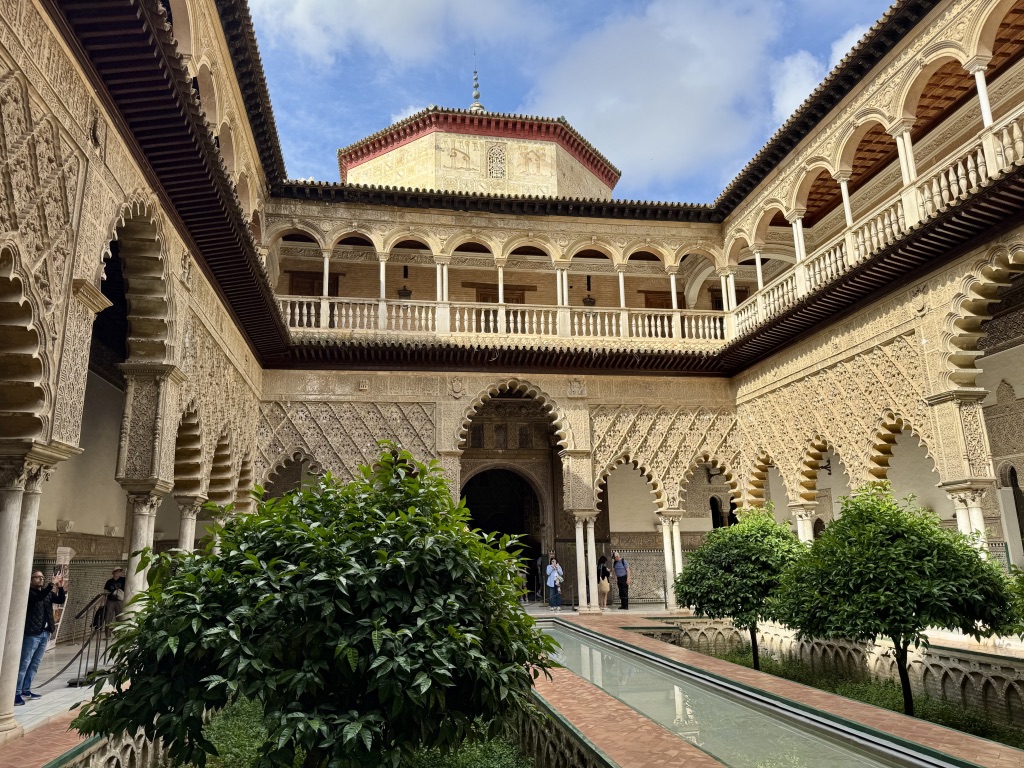
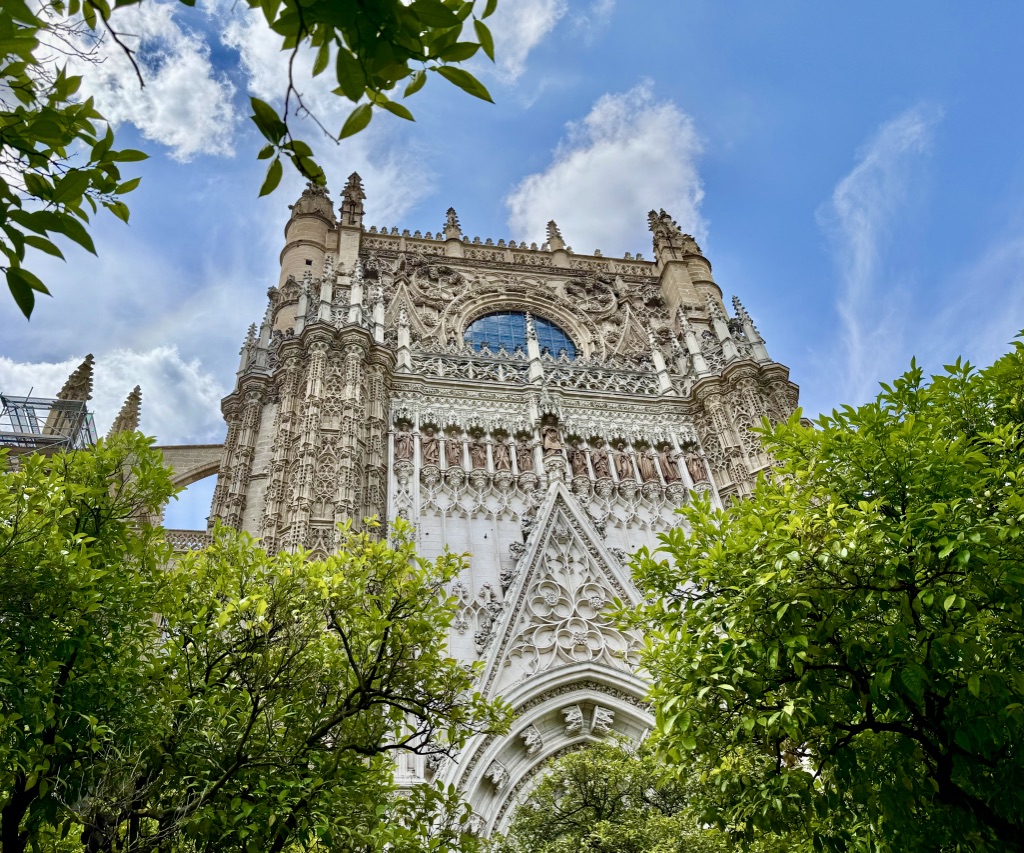
Next stop in Seville was the Cathedral. This enormous Gothic cathedral was built on the site of a former Moorish mosque; its construction began in 1401 and took over a century to complete. It is home to Christopher Columbus’ tomb and the Giraldo, a former minaret converted into the cathedral’s bell tower. The cathedral’s blend of Moorish, Gothic, Renaissance and Baroque influences reflects Seville’s diverse history and cultural heritage. More photos here.
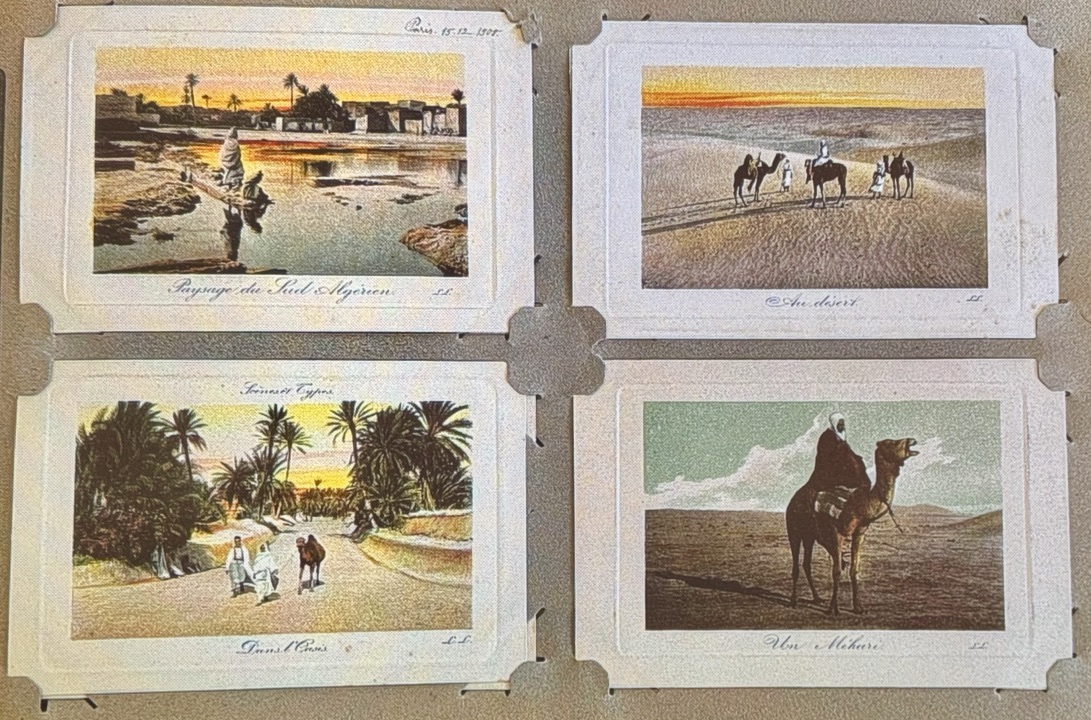
Cruising from Seville, Spain to Gibraltar took many hours. Elizabeth and I heard a second lecture by Ali Behdad of UCLA–this one on Postcards! He presented his recent research on early 20th-century French postcards from Morocco. Exotic landscapes, street scenes, and often eroticized images of women provide a unique window into colonial attitudes. Postcards were not only inexpensive forms of communication, but served as visual propaganda, carefully crafted to shape French public opinion about its colonial presence in North Africa. They romanticized the exotic, while obscuring complex realities. Here are three of his slides, his book is coming out soon!
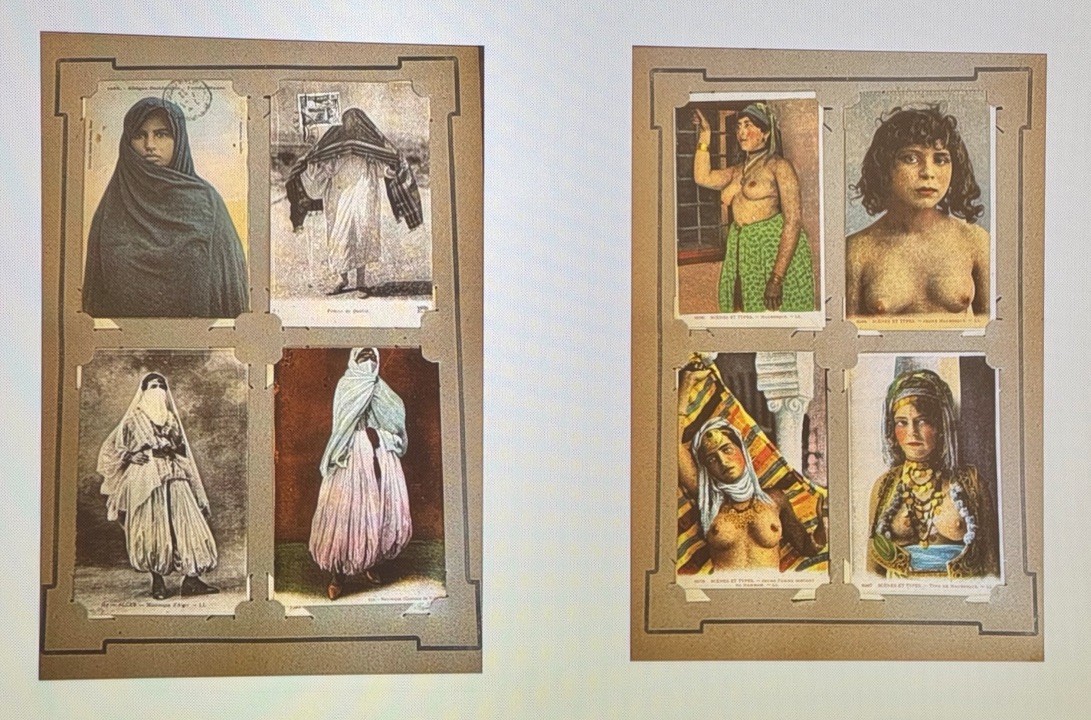 Women with and without veils.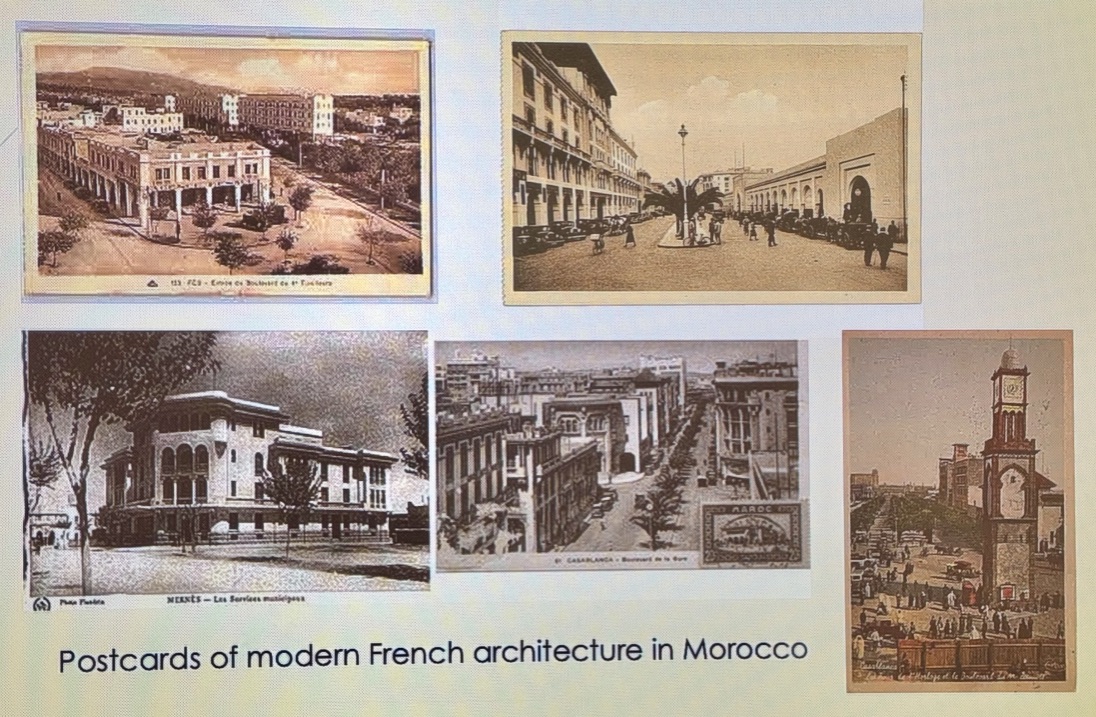
Behdad’s lecture inspired me to buy postcards, but stamps were harder to get, so I just brought them home to take turns on my fridge.
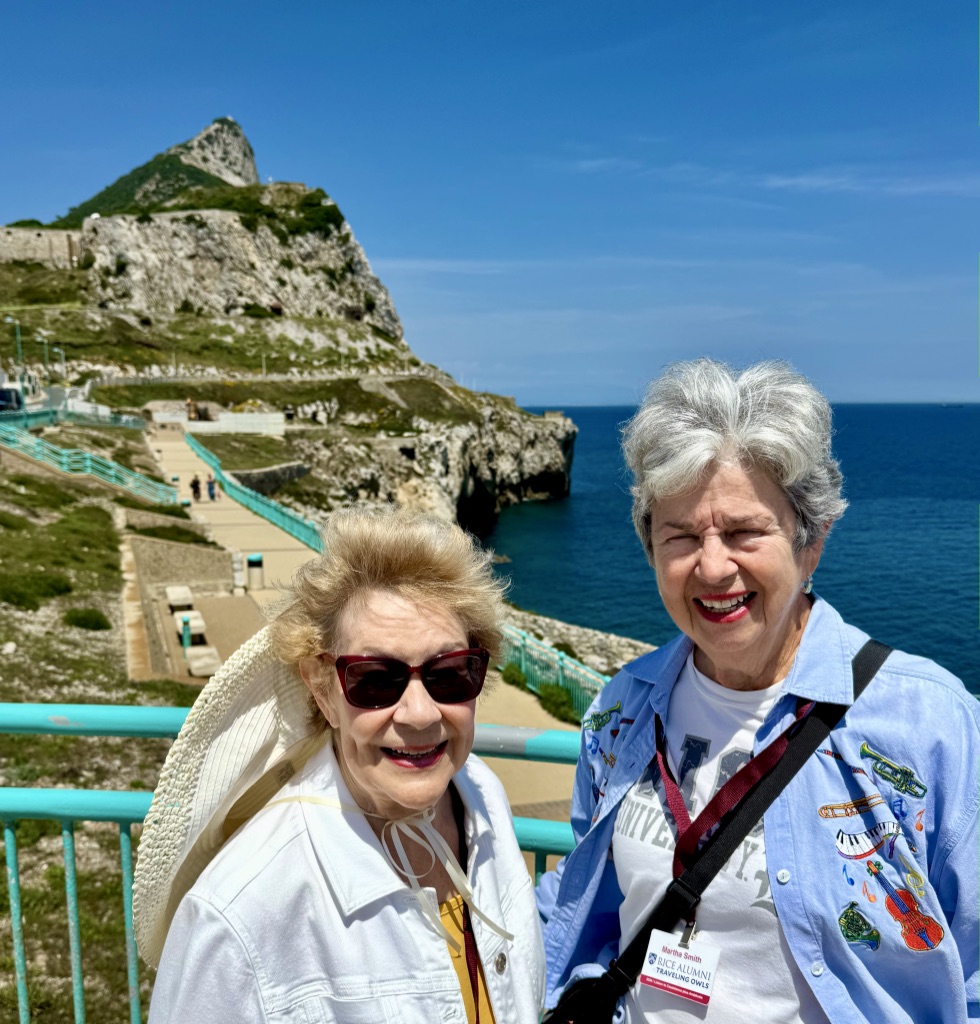 At last, Gibraltar on May 1–one of the Pillars of Hercules that marked the edge of the known world in antiquity! I had passed through the Strait of Gibraltar in June 1965 on my way to Vöcklabruck, Austria with the Experiment in International Living, but this was my first time to actually climb the Rock! We were picked up from the ship in vehicles that could do that safely. After a short walk around the Lighthouse, our driver took us to St. Michael’s Cave and introduced us to some of he Barbary Apes, a species of Barbary macaques who roam freely around the Rock and are Europe’s only free wild monkeys. Click for more photos in this album.
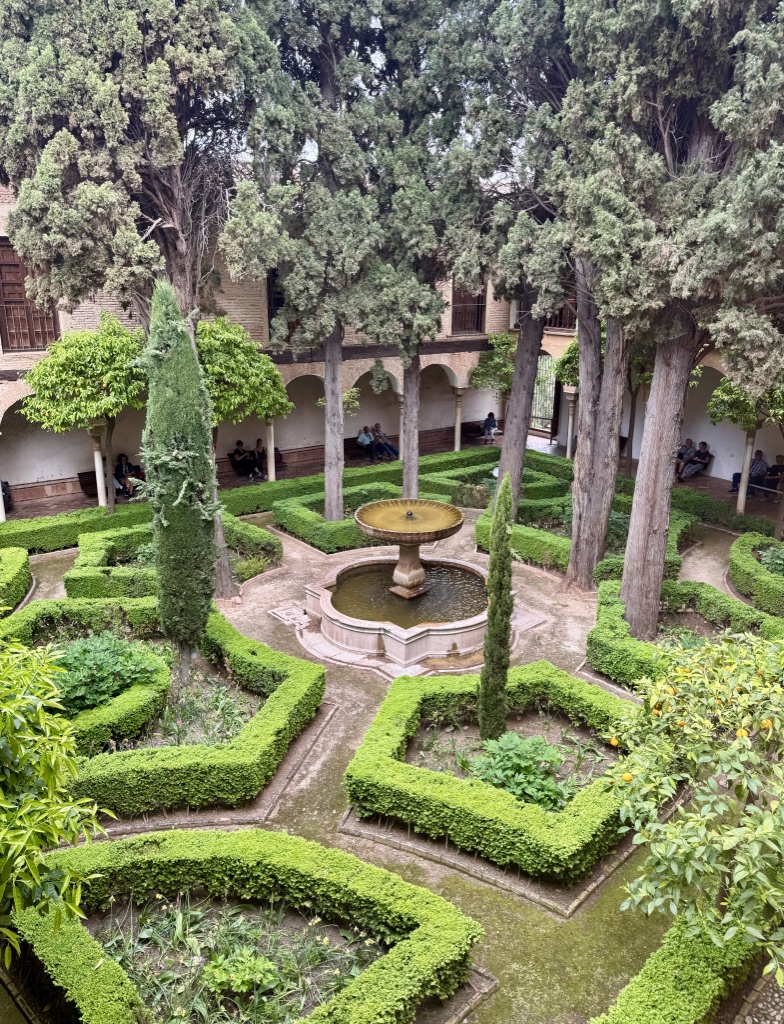 From Gibraltar we cruised that night to Malaga and on May 2, boarded buses for a 2-hour trip to Grenada. There we toured one of my favorite places in the world, the Alhambra and the Generalife Gardens. This photo album speaks for itself, but it doesn’t express the joy I felt returning there after my visit in June 2024. Seeing the gardens this time on a warm afternoon with crowds of people was definitely a contrast to viewing them early in the morning all by myself two years ago. Now I have a new perspective, which includes the fact that the Alhambra hosts over 20 million visitors per year! It was a pleasure to share this amazing place with Elizabeth and new friends with whom we had a delicious lunch on the grounds.
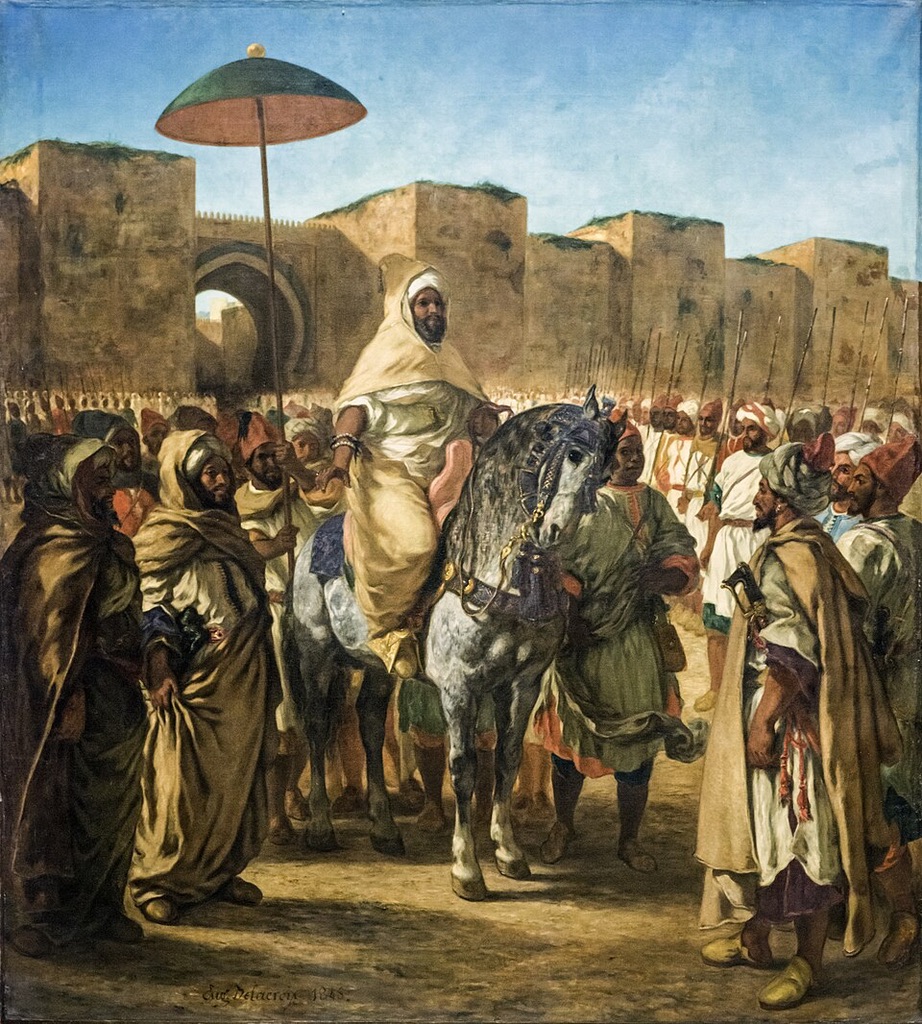
On Sunday, May 3, we arrived at the southern Pillar of Hercules that, with Gibraltar, was once considered the border of the known world. Tangier, Morocco, whose origins a Phoenician trading post date back to at least the 8th century BCE, is one of the oldest continuously inhabited cities in North Africa, Tangier was conquered and claimed multiple times over the millennia by Spain, Portugal and Morocco. It also captured the imagination of artists.In 1845 Eugène Delacroix painted The Sultan of Morocco.
 A Moroccan guide took us through the original Kasbah and escorted us through many souks, where I bought two pairs of lovely earrings, my only significant purchases on this trip. We saw Moroccan rugs, many flowers, lots of fruits and vegetables and had a lovely lunch. Finding out that tangerines grow nearby made me feel at home! Click here to come with me to Tangier!
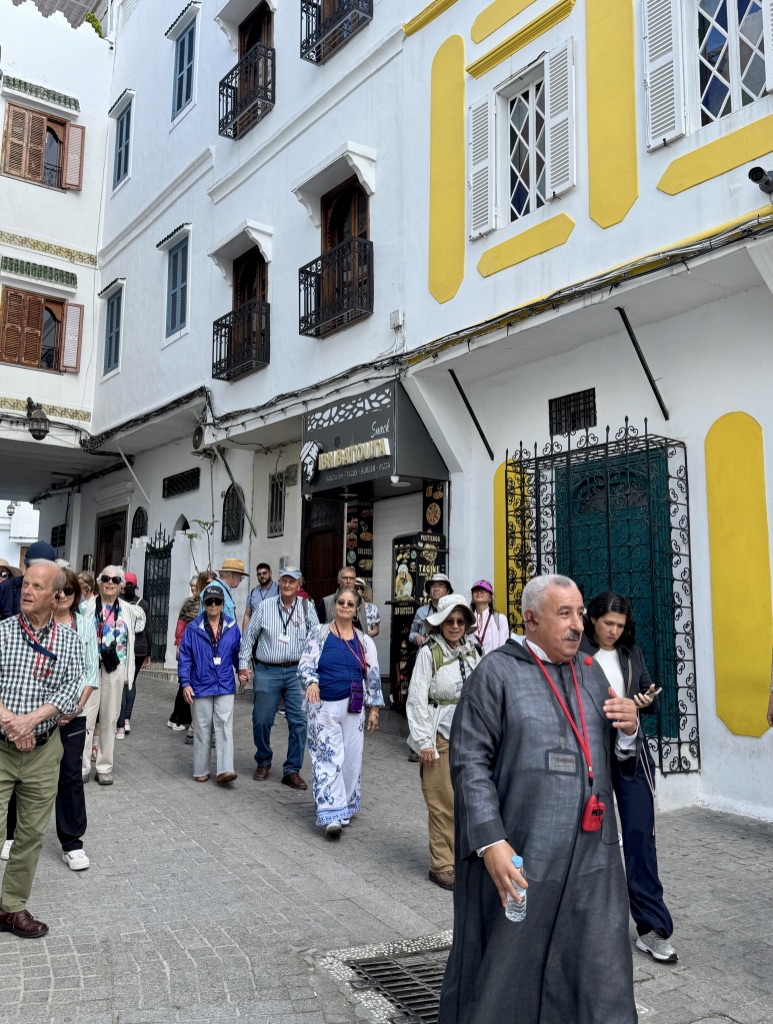
The afternoon of May 3 I treated myself to a massage and that evening the World Voyager Captain hosted a Farewell Reception. We enthusiastically applauded the many crew members of the ship who had served us well and made our trip so very pleasant. Then we cruised all night to see Casablanca on May 4. Right away I spotted Rick’s Cafe and remembered that famous 1943 movie. But Casablanca has changed since World War II. Just look at this new mosque!

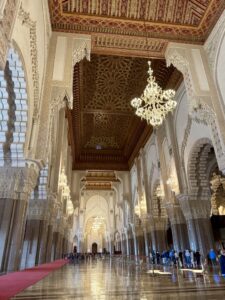
We had seen many mosques from afar, now we finally got to go inside the Hassan II Mosque in Casablanca, one of the largest in Africa and one of only two open to non-Moslems. Removing our shoes, we saw the treasures it contained. Adjoining the Mosque was a large school and administrative buildings. Nearby was an enormous cemetery. In this album you’ll also see photos of the capital city, Rabat, our wonderful lunch in Sale, and pictures of the Mohamed V Mausoleum dedicated to King Mohammed V and his two sons. From the Mausoleum we could see a new tower named for Mohammed VI and a Grand Opera House designed by Zaha Hadid, an architect whose lovely work I have seen in Miami.
Prior to this trip I had read Adventures in Morocco by Alice Morrison, a BBC journalist who was born in Edinburgh, grew up in Africa, and speaks fluent Arabic. This tour showed us how Morocco is continuing to expand and develop in the 21st Century. That evening I passed on Morrison’s book to our new friends from Rice, the Gottshalks, who were continuing to explore this awesome country.
After a fabulous journey to new places and  eras of history we knew little about, Elizabeth and I bade the Traveling Owls and our many new friends a fond farewell. We arose at 3:00 am on May 5 and were bussed to the Casablanca airport for our flights home to DC and Florida. I am deeply grateful that my dear friend Elizabeth invited me on this journey and that Gohagan did such a wonderful job of arranging for all our needs, especially intellectual stimulation, great food, and just the right amount of physical exercise.❤️
Leave a Reply