Kenya Safari
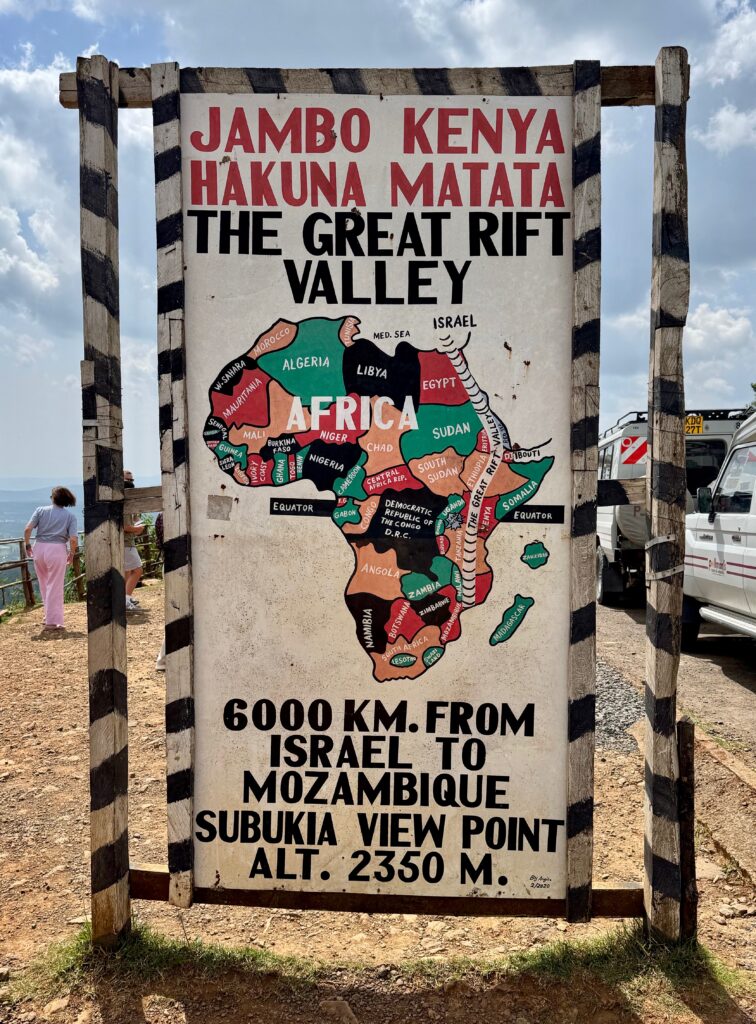
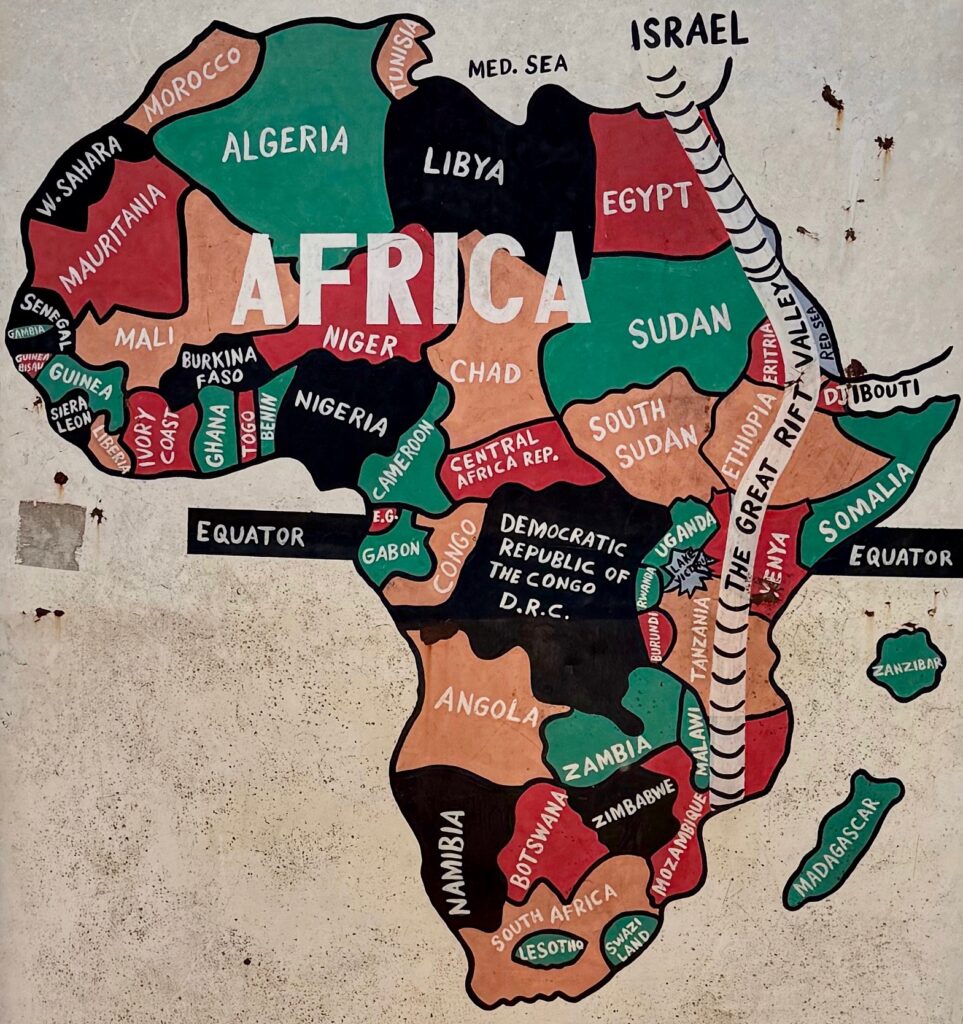
In Kenya, a sign welcomes visitors to the Rift Valley, which extends 6000 kilometers along the eastern edge of Africa, from Israel to Mozambique. It is a massive land depression that was formed by plate tectonics about 25 million years ago. Olduvai Gorge, a World Heritage Site in the Tanzania part of the Valley, is called the “Cradle of Mankind” because it is believed to be where remains of the first human beings were found.
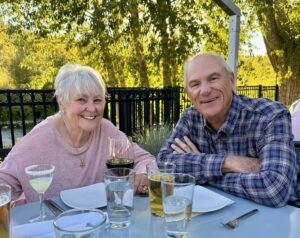 When cousins Jay and Maxann invited us to join their family for a safari in Kenya, we readly accepted. I had visited Tanzania with Kate in 2019 and now I could share with Steve the glories of this magnificent Valley, a great place for observing big wild animals. Lilli and Violet agreed to come, too. There were twenty of us–four grandparents, seven parents, and nine up-and-comers. For an overview of our wonderful trip, see this Google album.
Here are the groups we formed to occupy the four Toyota Land Cruisers provided by Pollman’s & Orbridge.
Maxann usually traveled with the family of her daughter, Bailee, whose husband Len and daughter Nile were delayed five days by a mandatory orientation session at the University of North Carolina, where Nile will enroll this fall. Here they are reunited in Kenya.
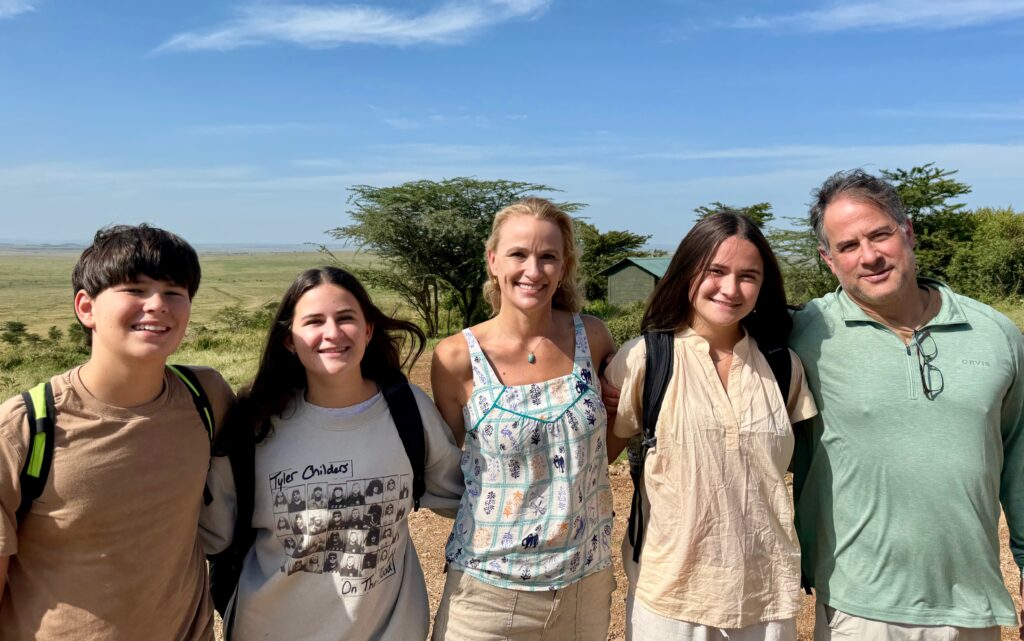
The four members of Corby and Joe Smith’s family were hard to catch together, so I’ll group them here. Their cousin, Max Collins-Friedland, sometimes traveled in their Cruiser with the older cousins he so admired.
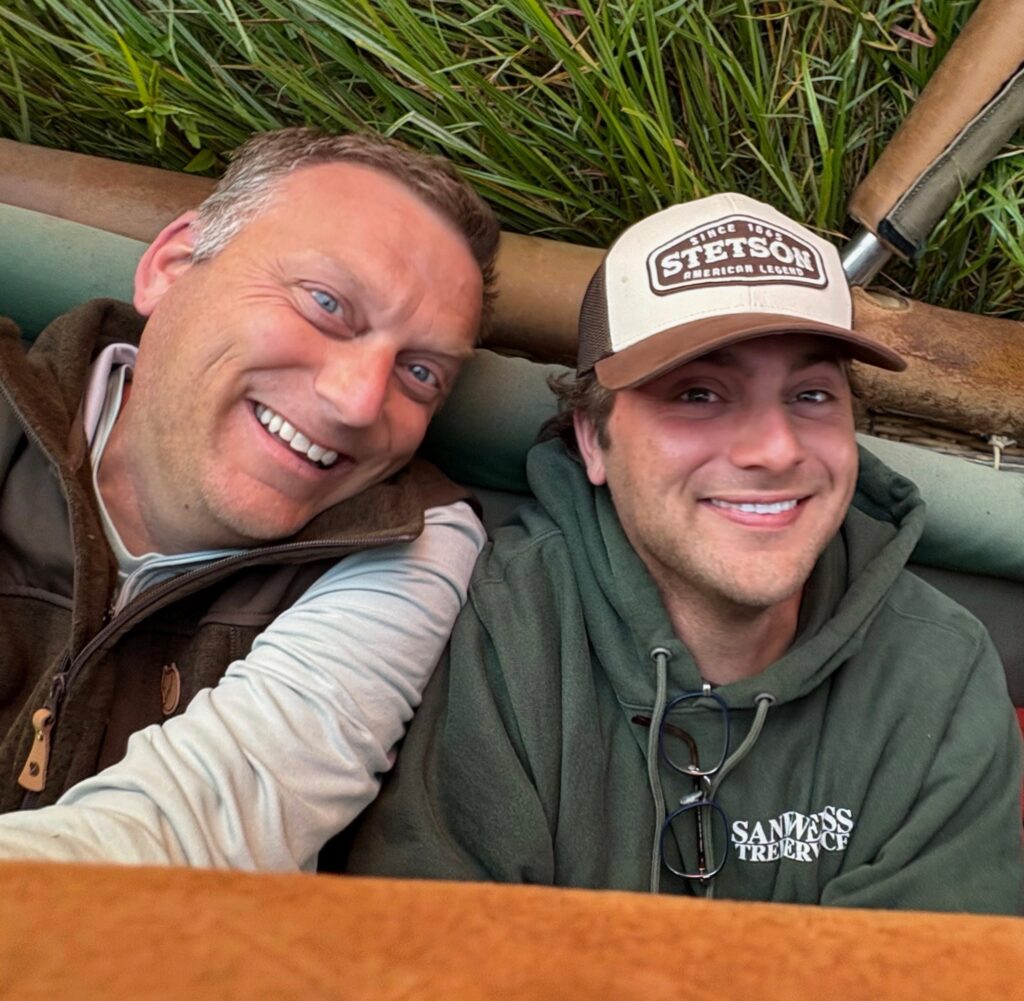
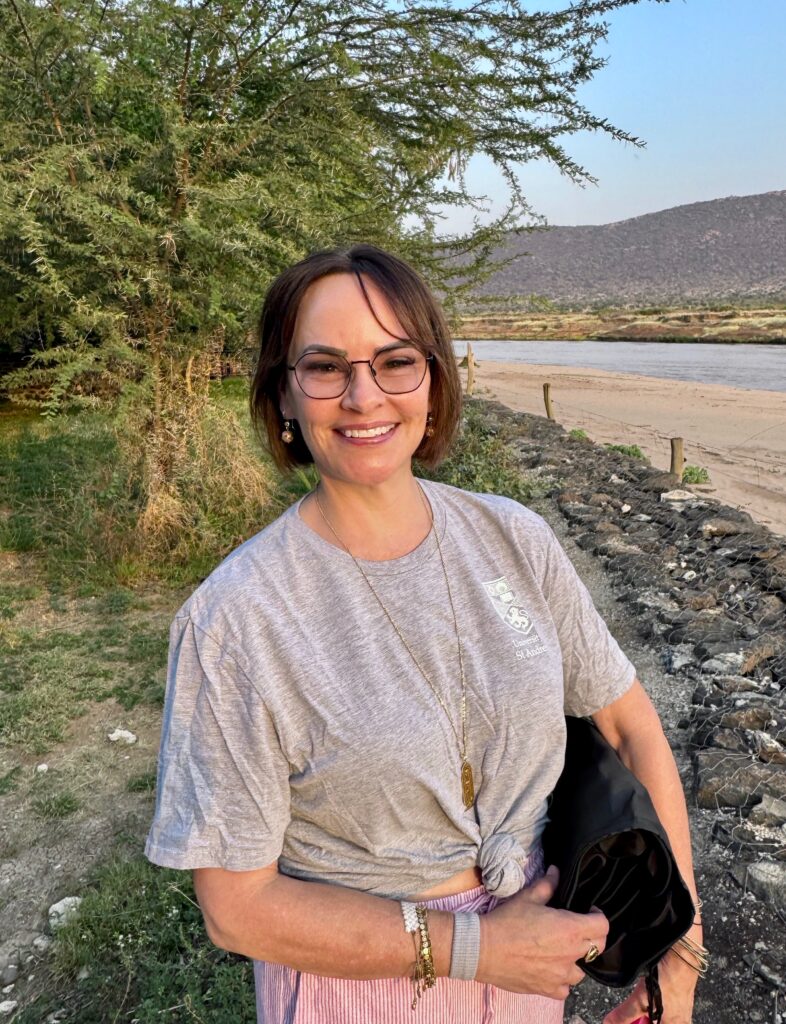
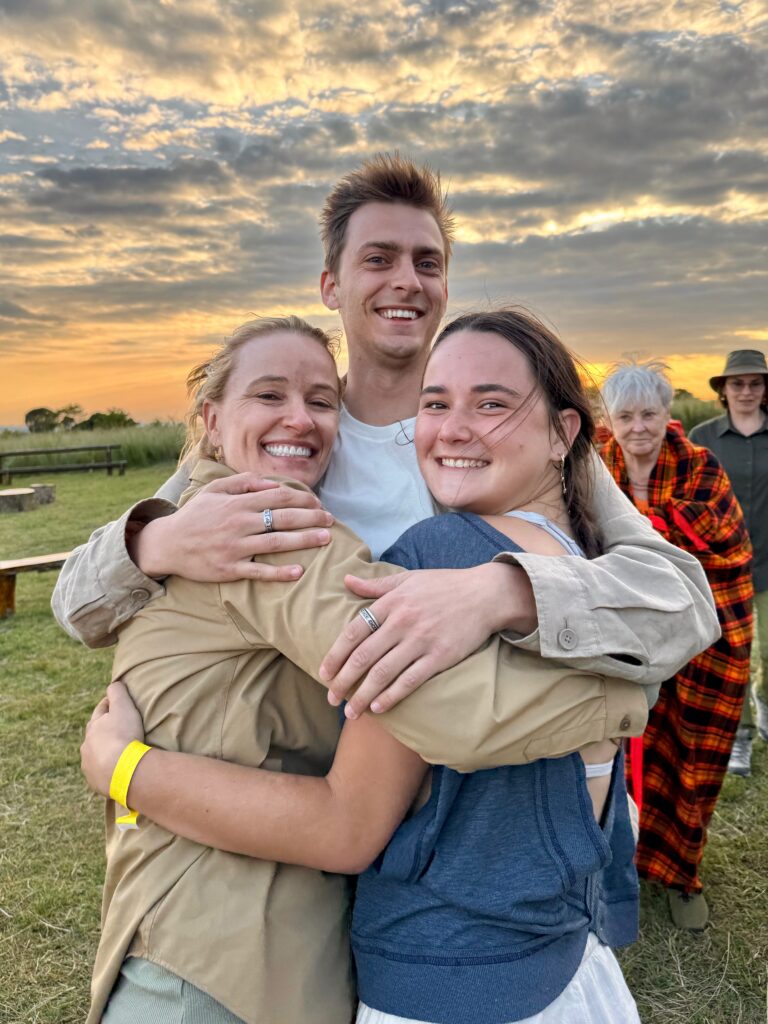
New friends for us were the Colacos, long-time friends of both the Collins-Friedland and Joe Smith families in Charlotte NC. It was joy to get to know them. Emma, on the left, and I formed a special bond. She is a rising senior at Rice University and a member of Brown, the residential college I served as president when it first opened in 1965. Her sister Hannah is a second-grade teacher in Raleigh; her brother Max will soon be a high school senior.
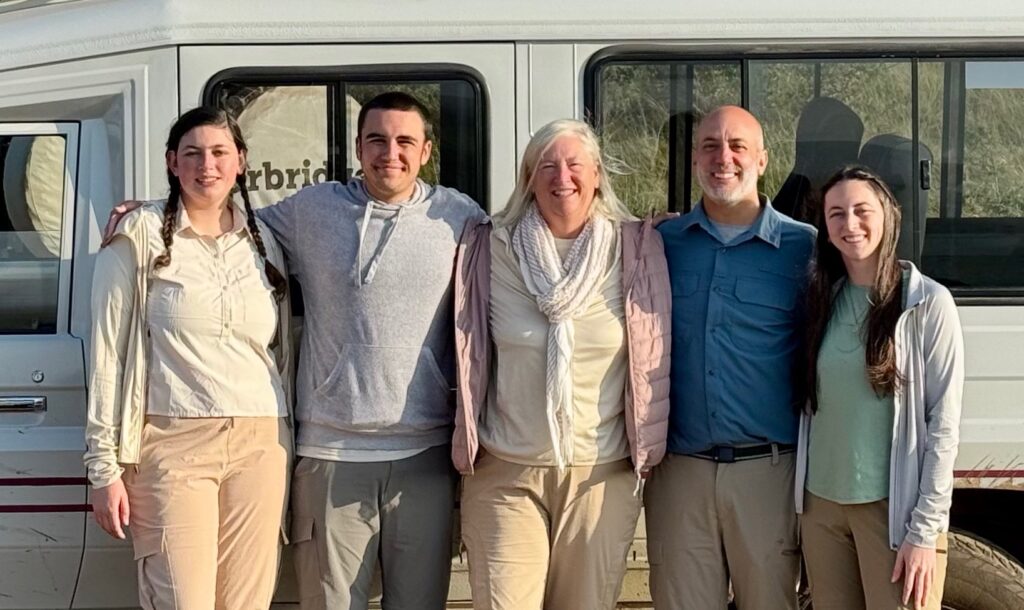
Yes, there were three people named Max: Maxann Collins, Max Colaco, and Max Collins-Friedland, and two named Jay: Jay Collins and Jaye Collins-Friedland. There were eight Smiths: four of us and four in the family of Joe and Corby. Steve and Jay are the first cousins. Jay’s two daughters are second cousins with Lilli (and David and Shelby). Everyone got along very well together!
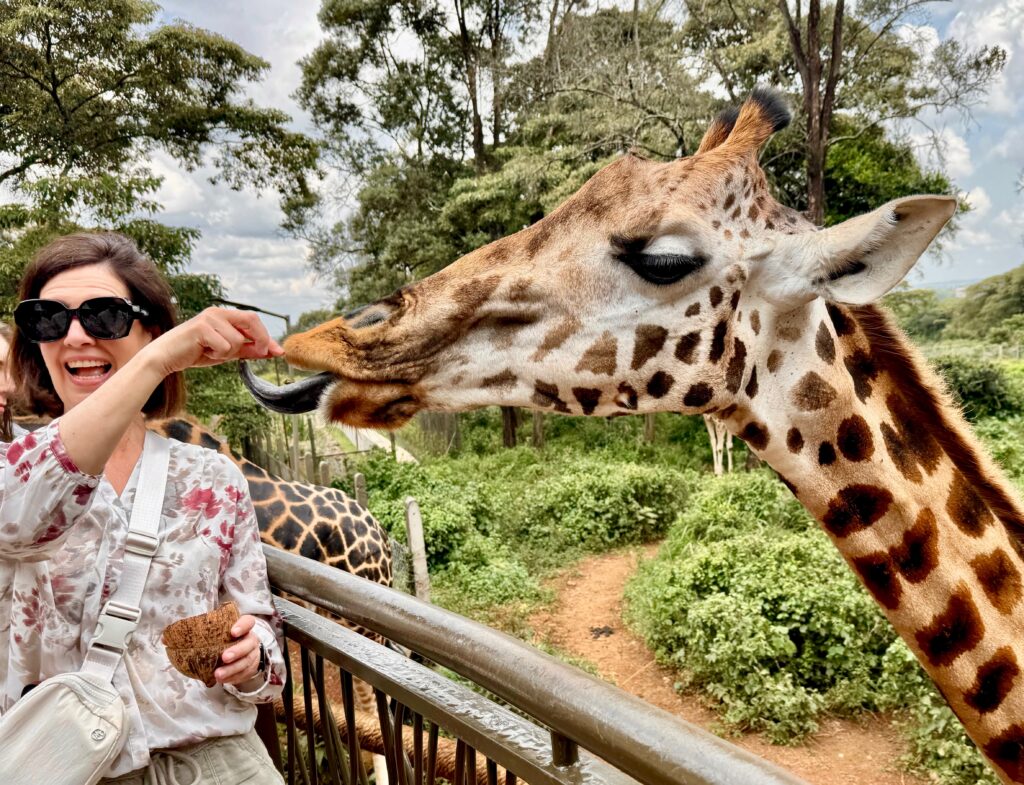
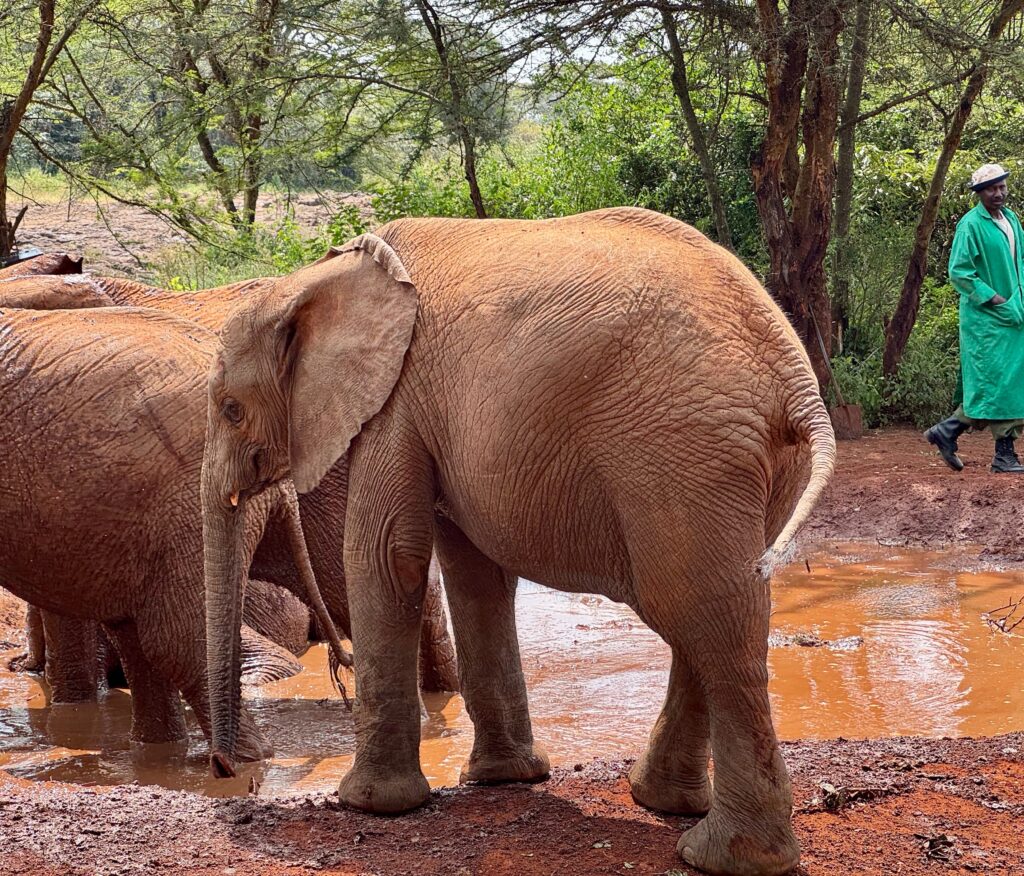
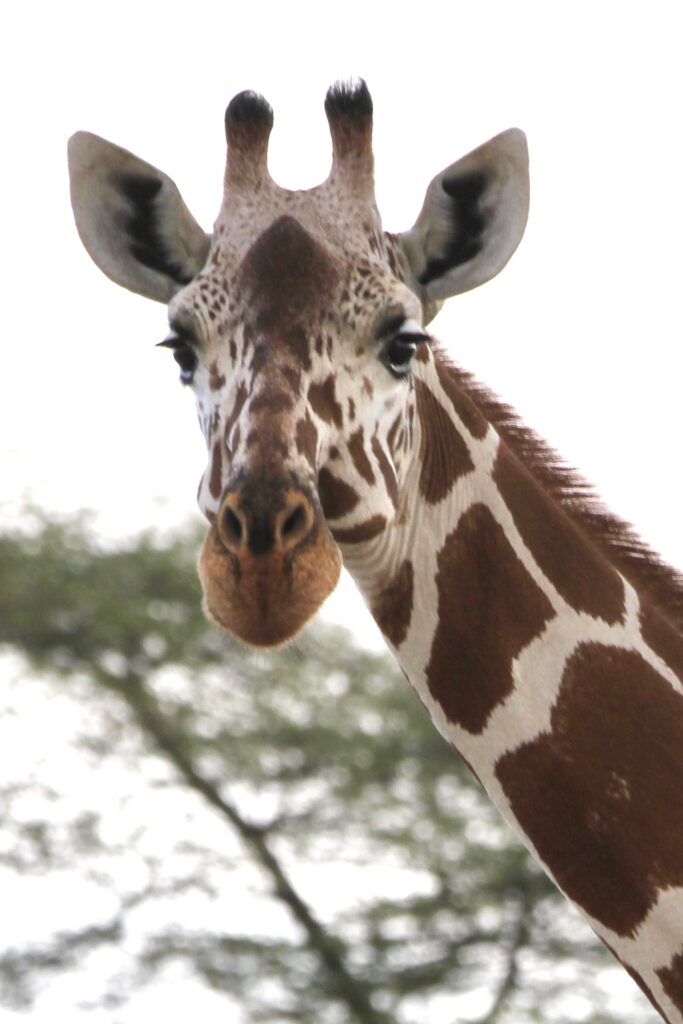
On our only day in the city of Nairobi, we were bussed to the Giraffe Centre, where we got to feed Rothschild Giraffes, and to the Sheldrick Elephant Orphanage, that allowed a one-hour viewing of the 13 lonely elephants they care for. The elephants were close enough to touch and felt grisly!
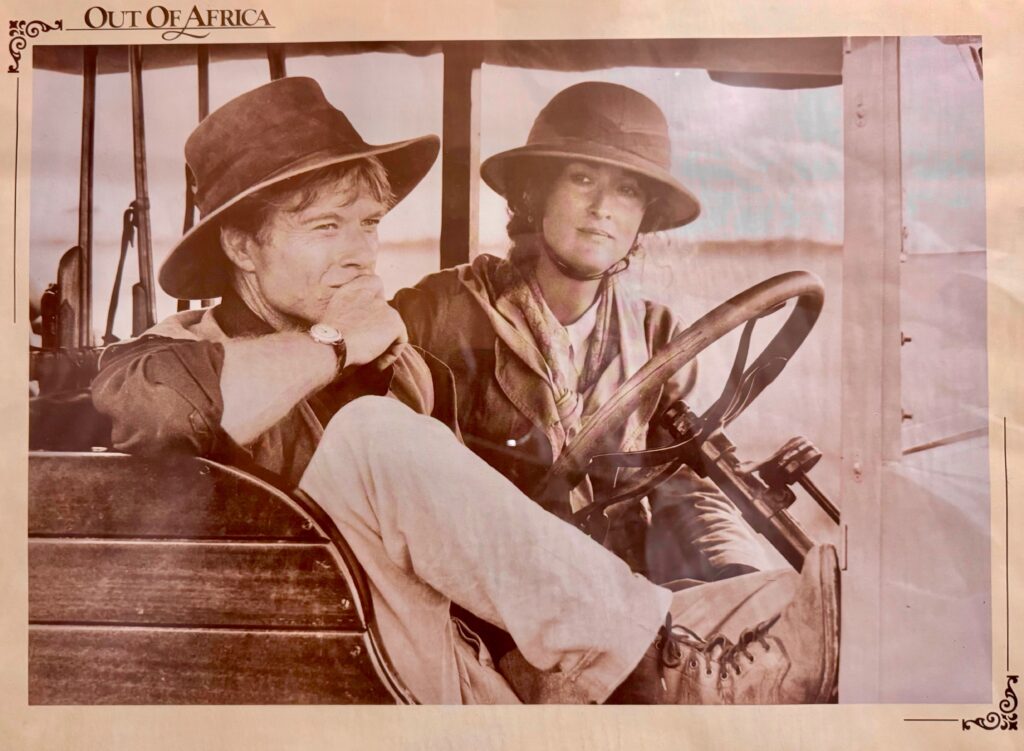
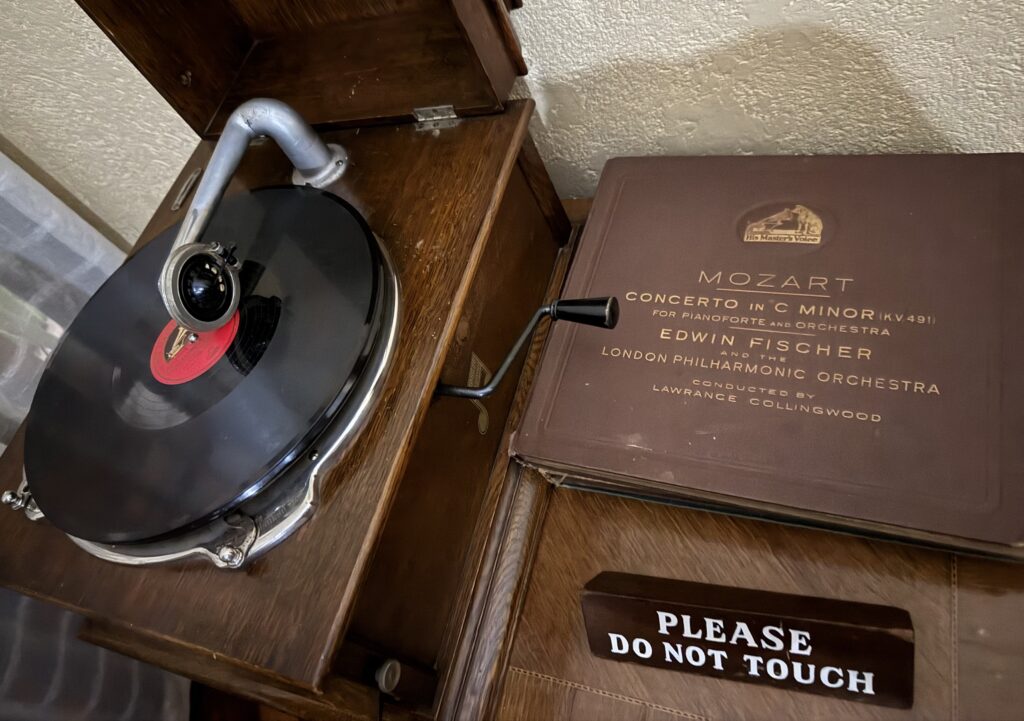
Next we enjoyed visiting the home of Karen Blixen, whose book, Out of Africa, was made into the wonderful 1985 movie starring Meryl Streep as Karen and Robert Redford as her lover, Denys Finch Hatton. I especially loved seeing the phonograph and record that Denys had brought to Karen’s remote location. Her house is now surrounded by a dense section of Nairobi named Karen.
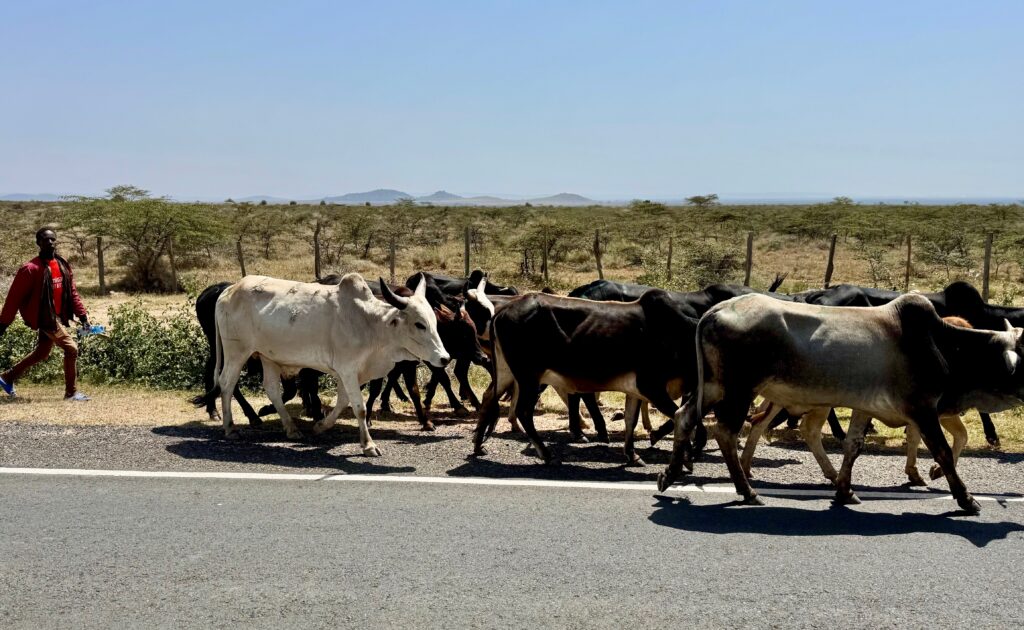
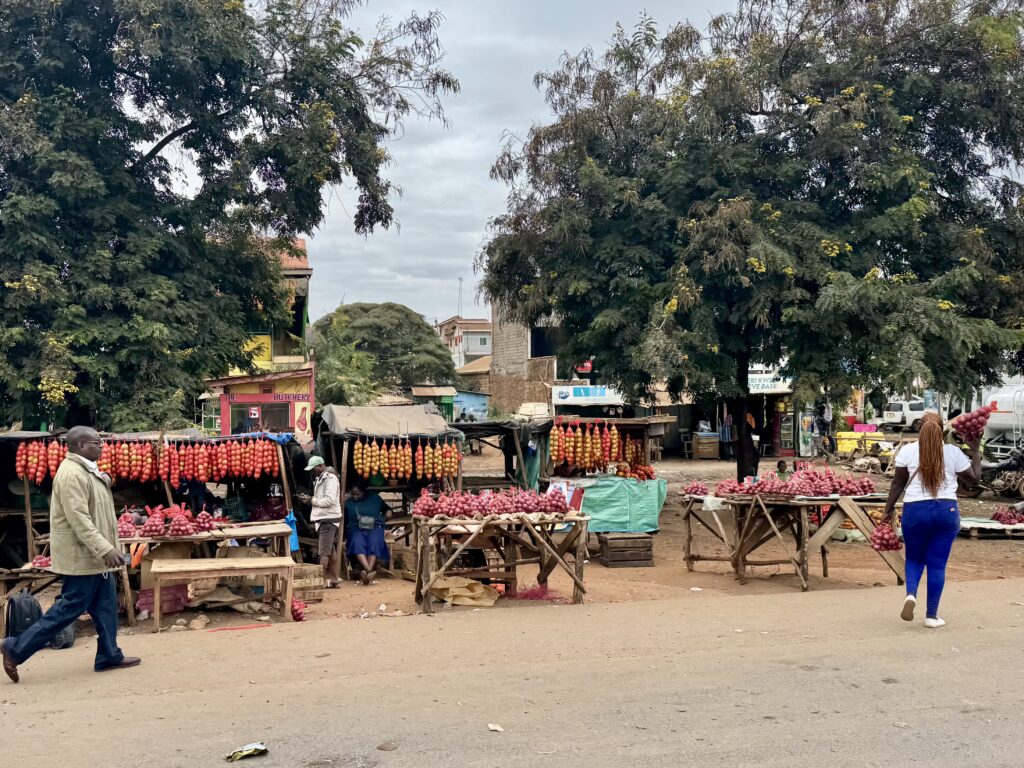
A 240-mile drive north from Nairobi on June 21 took longer than it would have at home. Kenyans are so accommodating and easy-going that they erect very few traffic signals. Instead, they have many speed bumps along the highways. This system seems to work pretty well; I saw no accidents. Speed was just not a priority. Our drivers were remarkably skilled in passing closely and yielding right of way. Next to every highway we saw sheep, goats, and cattle in small herds and many roadside vendors.
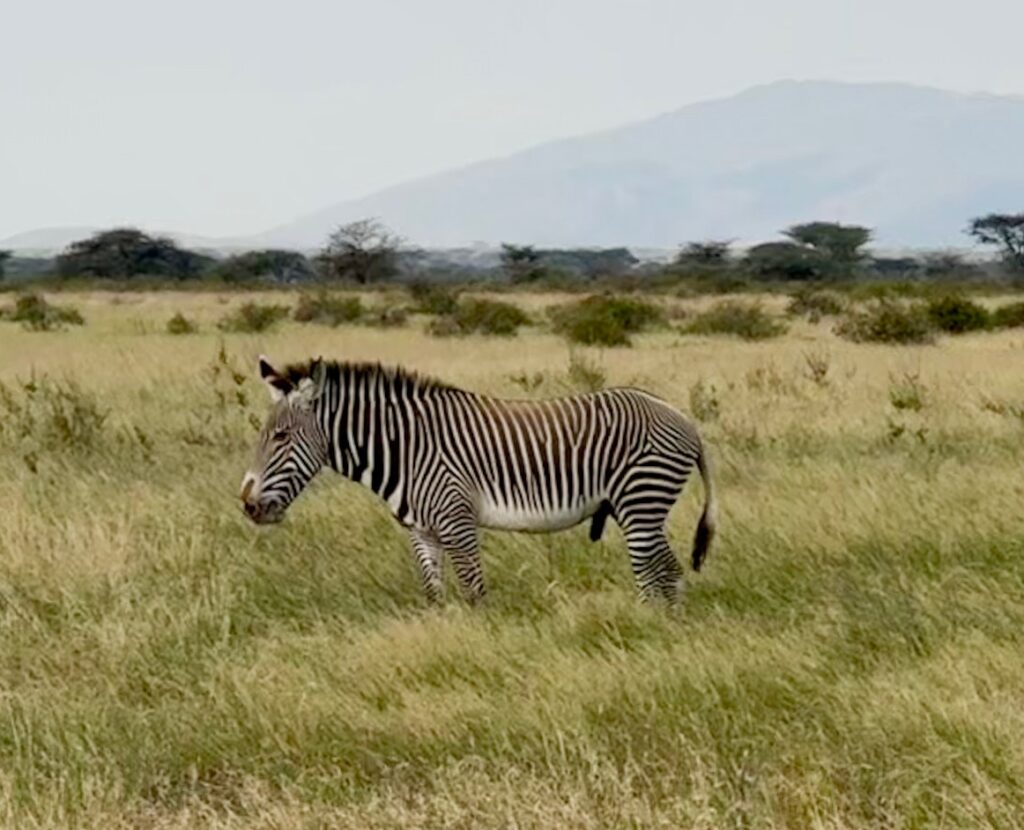
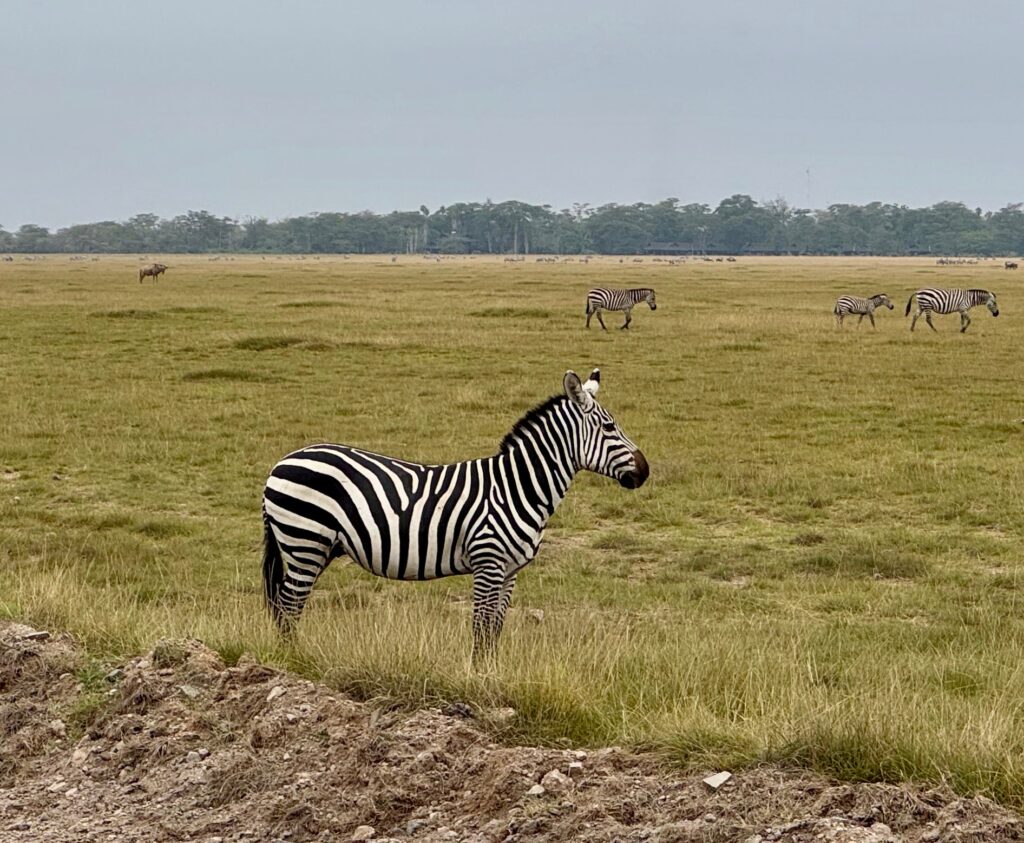
Our journey that day took us past Mount Kenya to the Ashnil Samburu Camp in Isiolo. There we saw Grevy’s Zebra, the largest member of the zebra family with narrow black strips on a background of white, covering the entire length of the legs down to the hooves. We would see multitudes of Common Zebras elsewhere in Kenya, but the Grevy Zebras only here. And we saw the Beisa Oryx and herds of elephants, always looking out for their young. There were no orphans here.
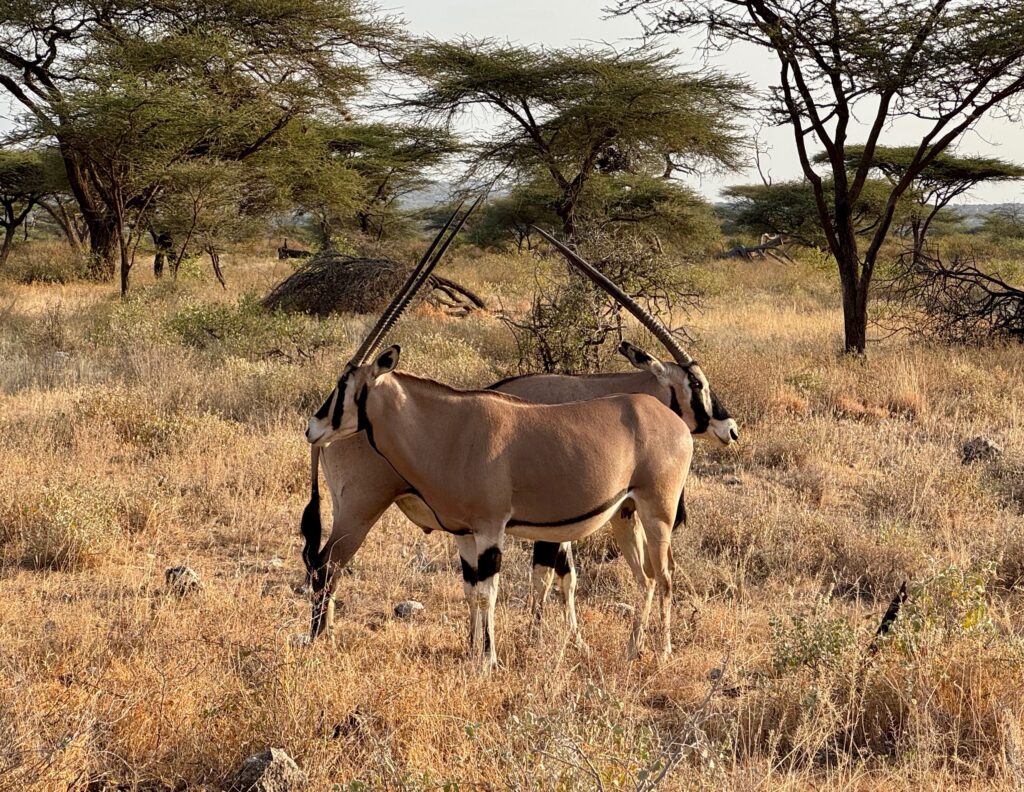
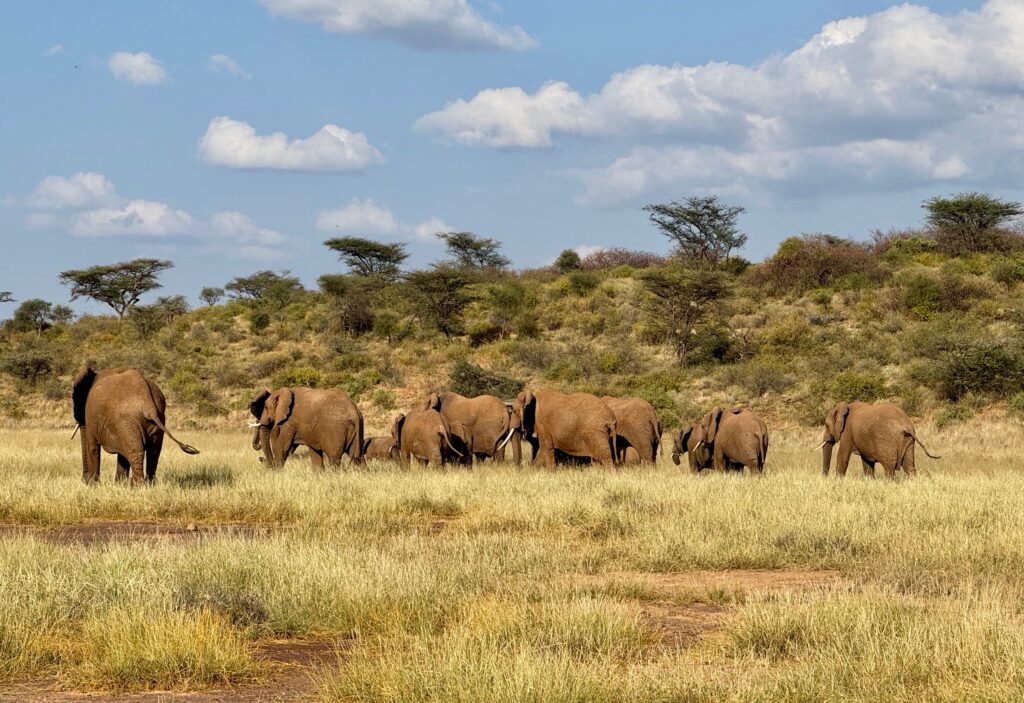
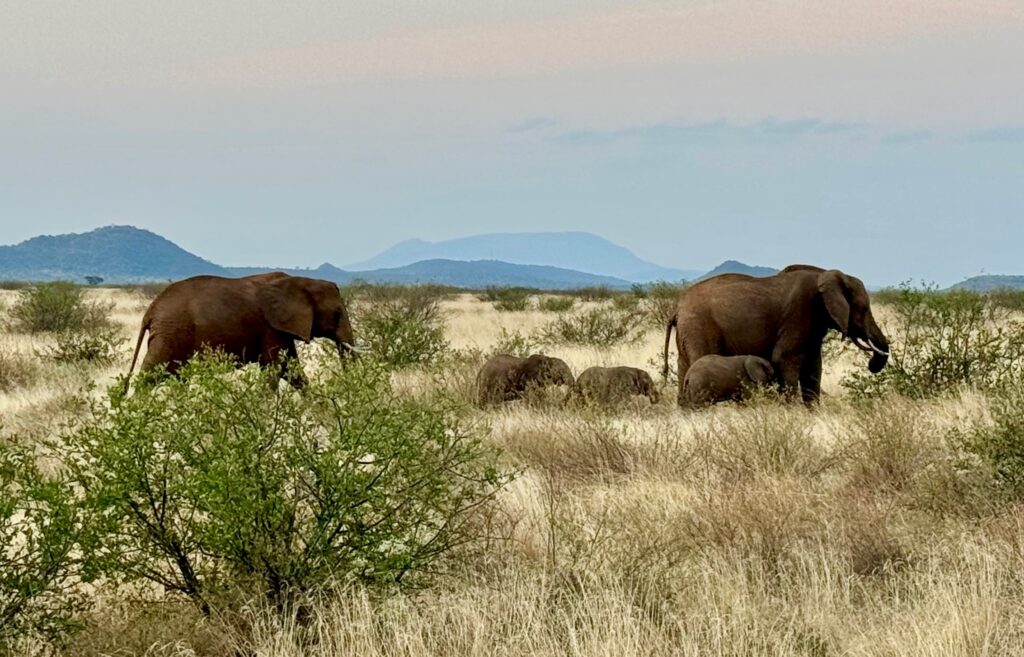
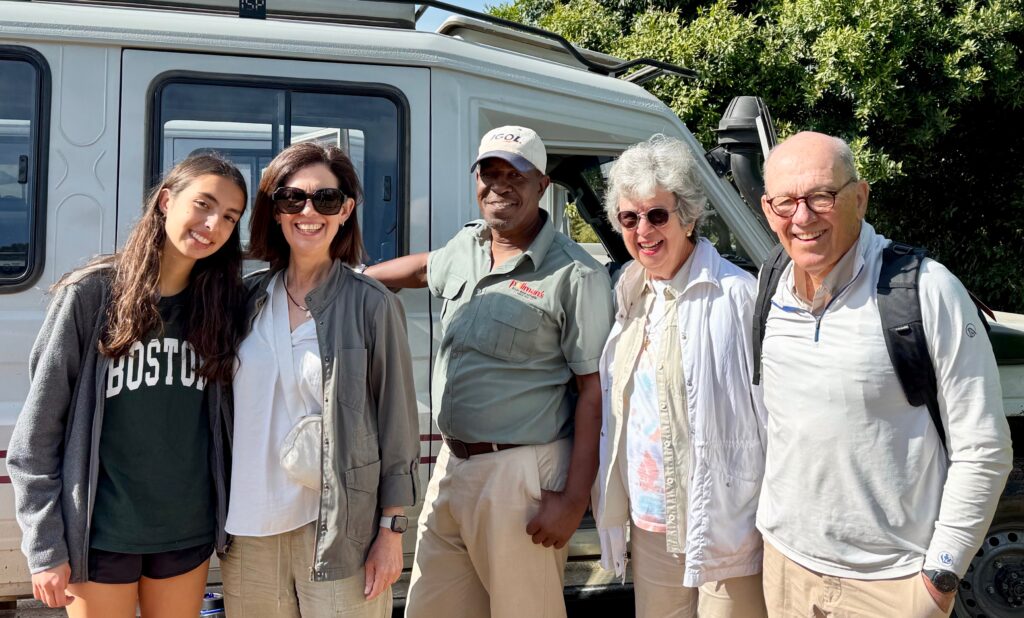
After two nights in Samburu, we headed south on June 23 to Lake Nakuru, 90 miles northwest of Nairobi. Crossing the Equator we stopped to watch a demonstration of how water drains clockwise in the North and counter-clockwise in the South..The weather was great with daytime temperatures in the 70s. Sunrise was 6:30 am and sunset, 6:30 pm. Here is the whole group with our guide, Amos Kibata (“Famous Amos”).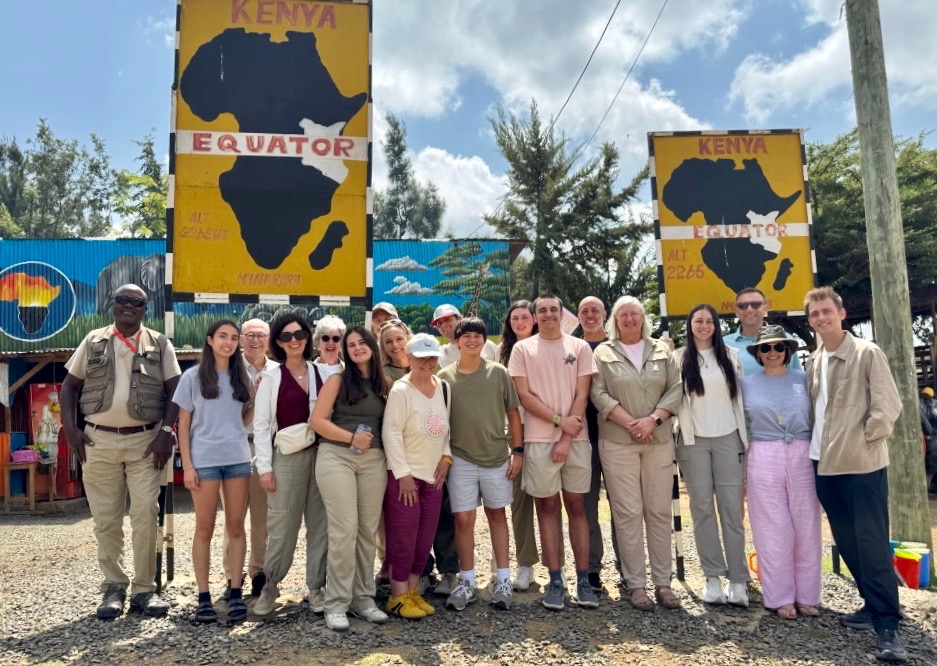 On the approcah to Lake Nakuru our guide pointed out tented fields of horticultural crops. Lake Nakuru showed itself a paradise for birds and buffalos.
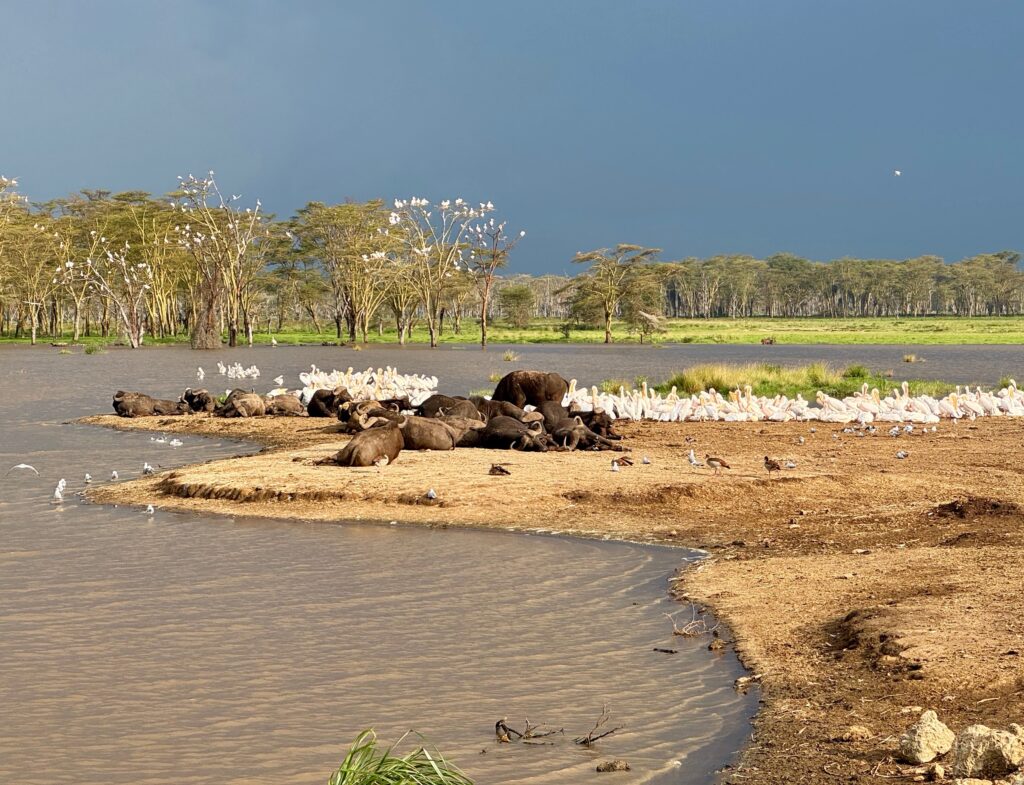
Here are more animals we spotted.
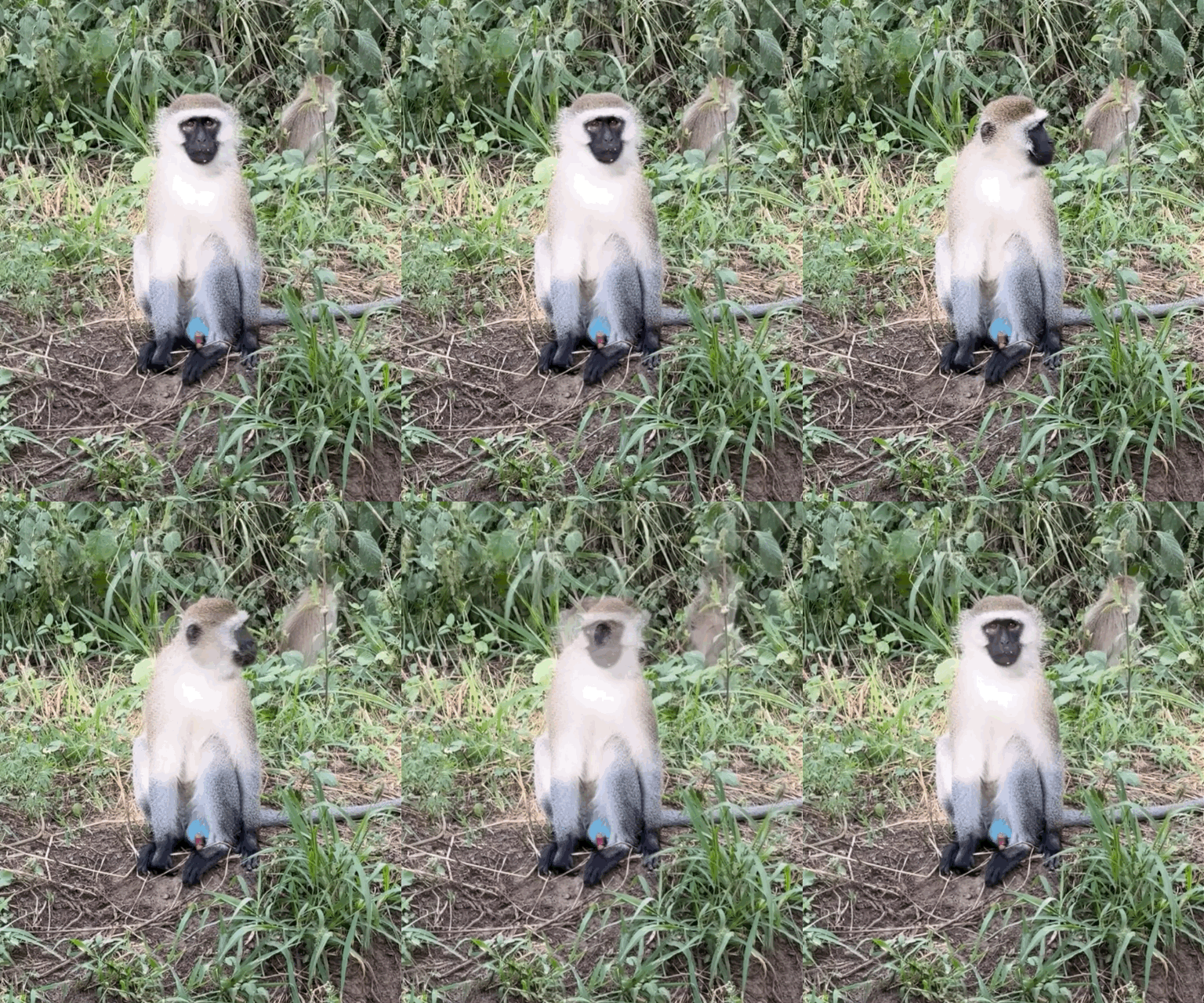
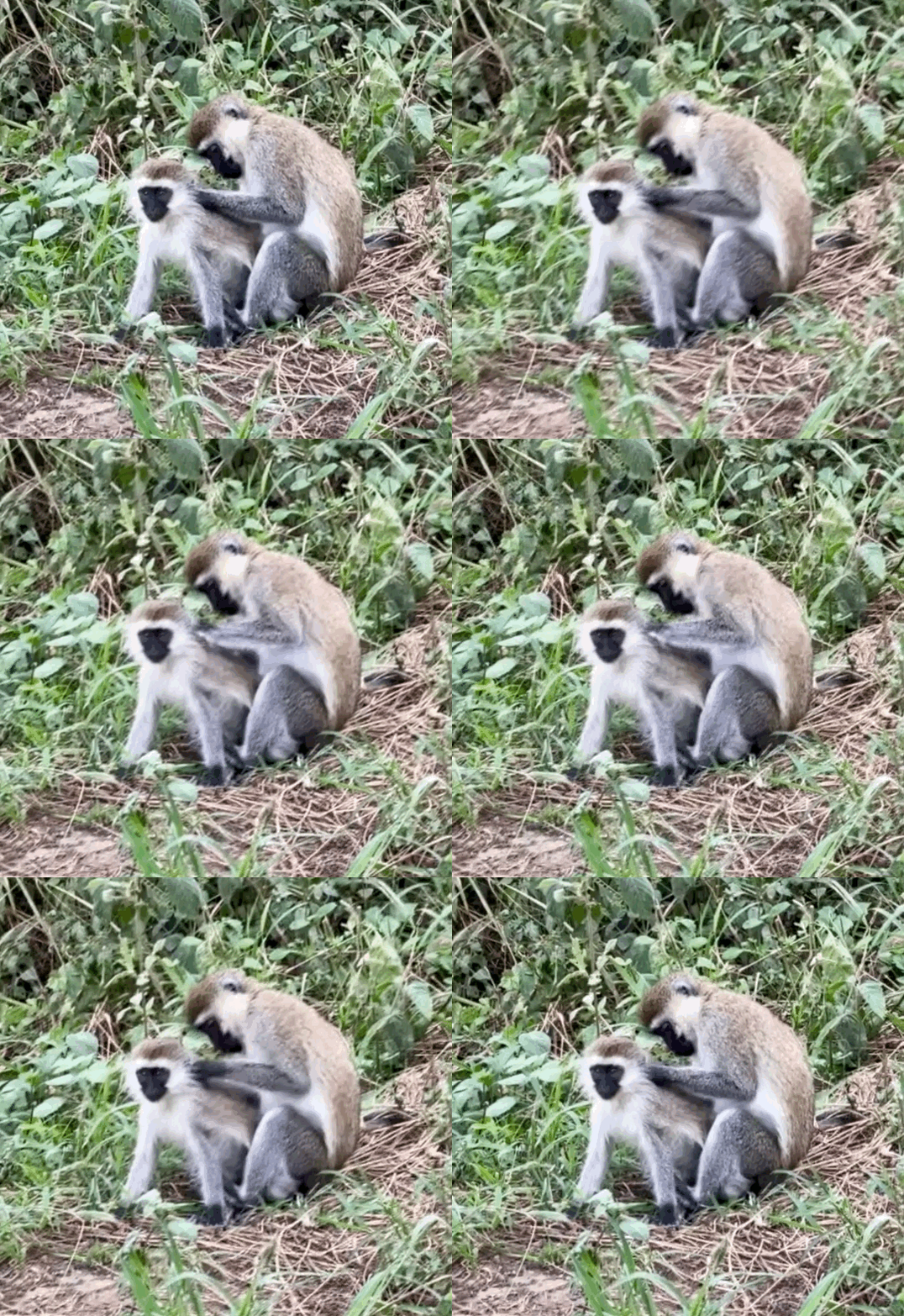
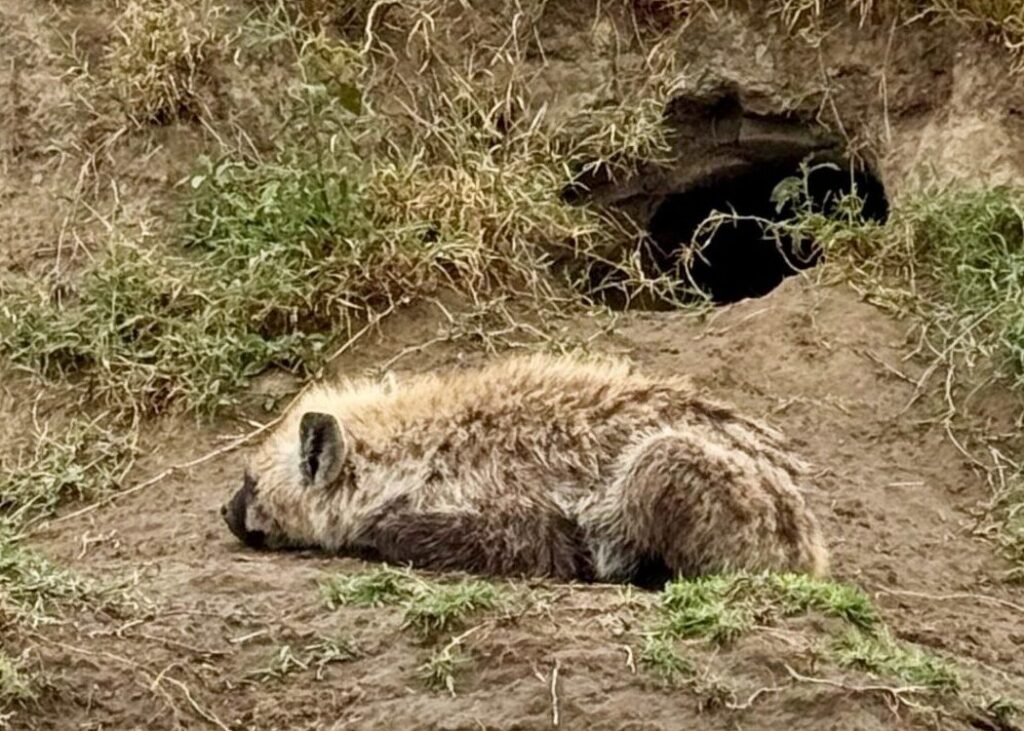
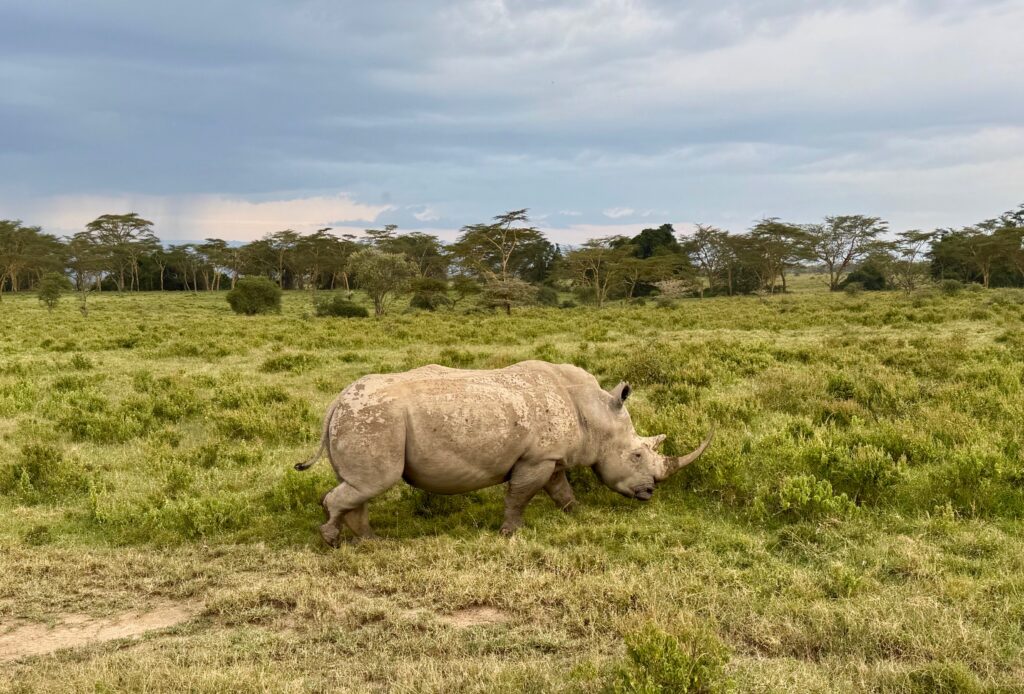
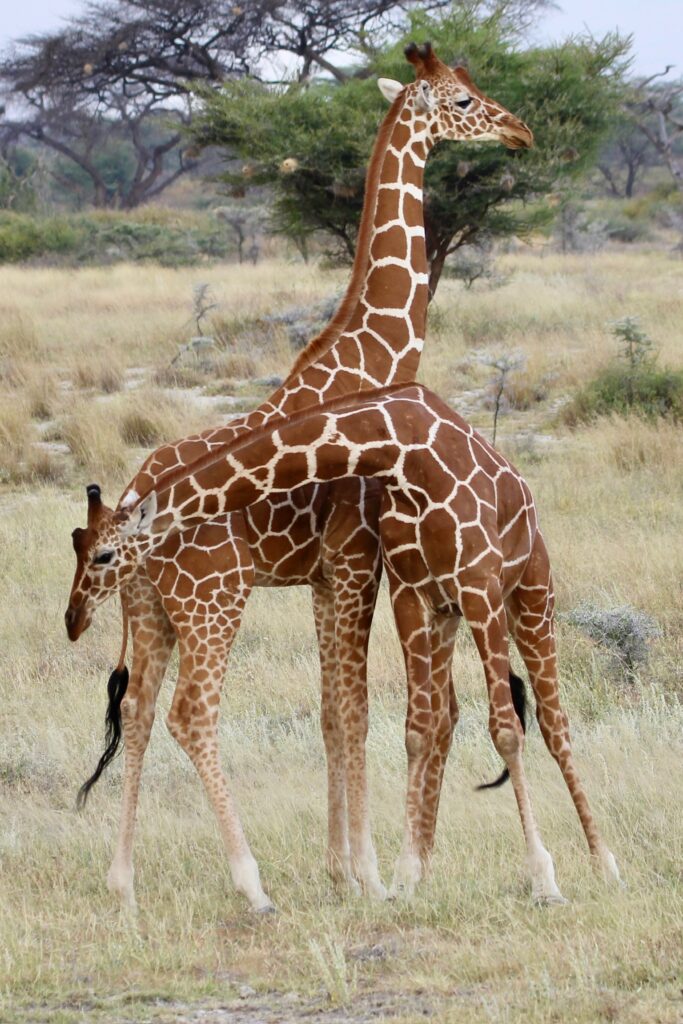
It took almost all the next day to reach the Masai Mara Game Reserve, the northern extension of Tanzania’s famous Serengeti National Park I had visited in 2019. Here the animals roam freely across man-made boundaries. The waving “wheat-eared” grass attracts huge numbers of zebras, giraffes, and gazelles. Lions, buffalos and elephants meander across the landscape. Here we got our best photos for our animal check lists, beginning with lions.
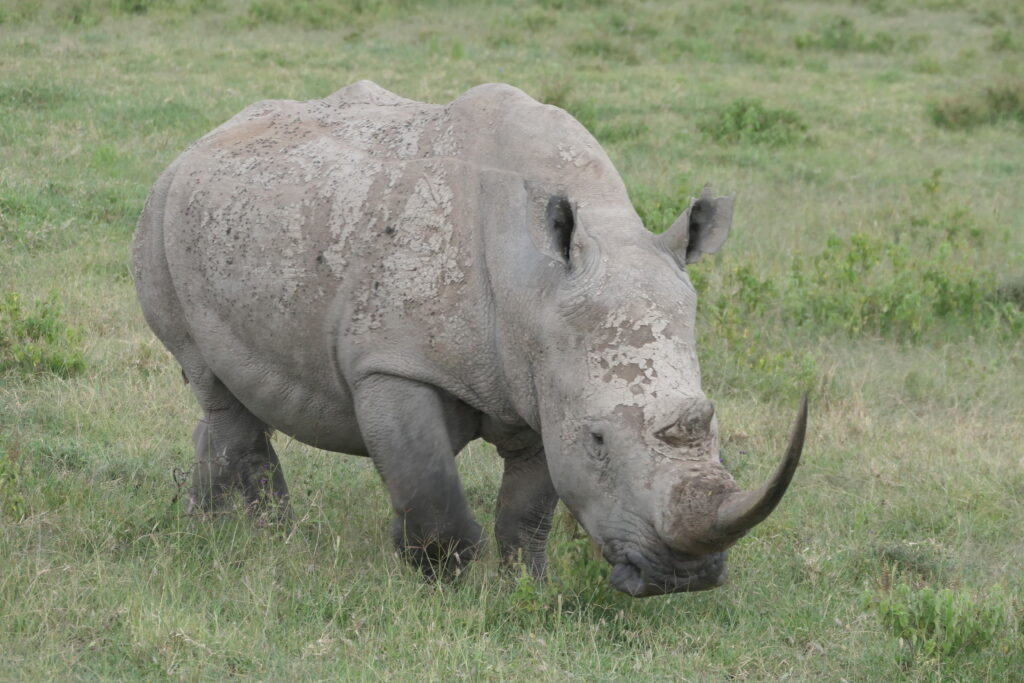
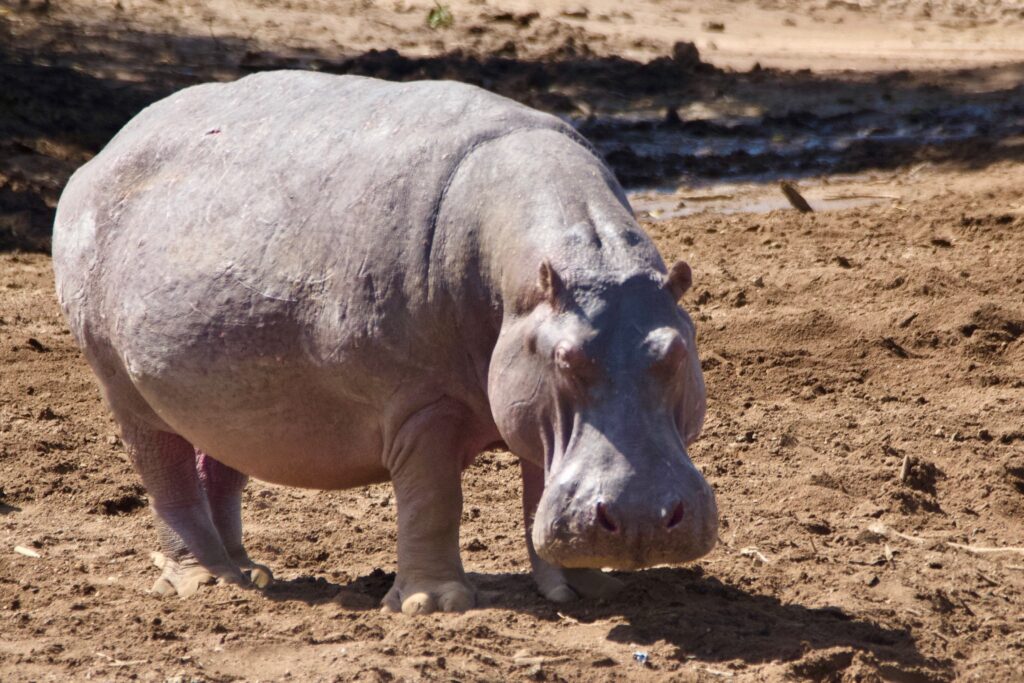
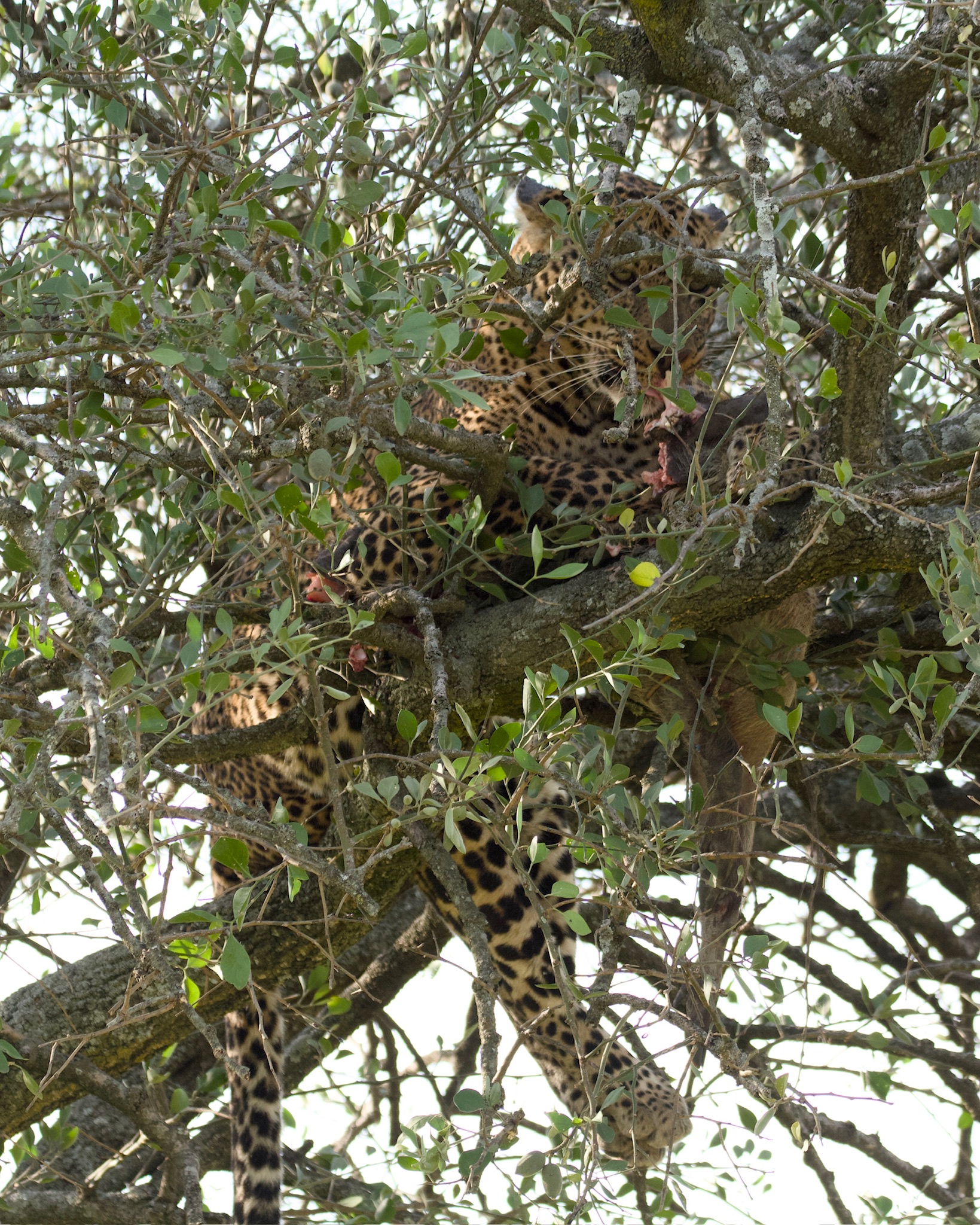
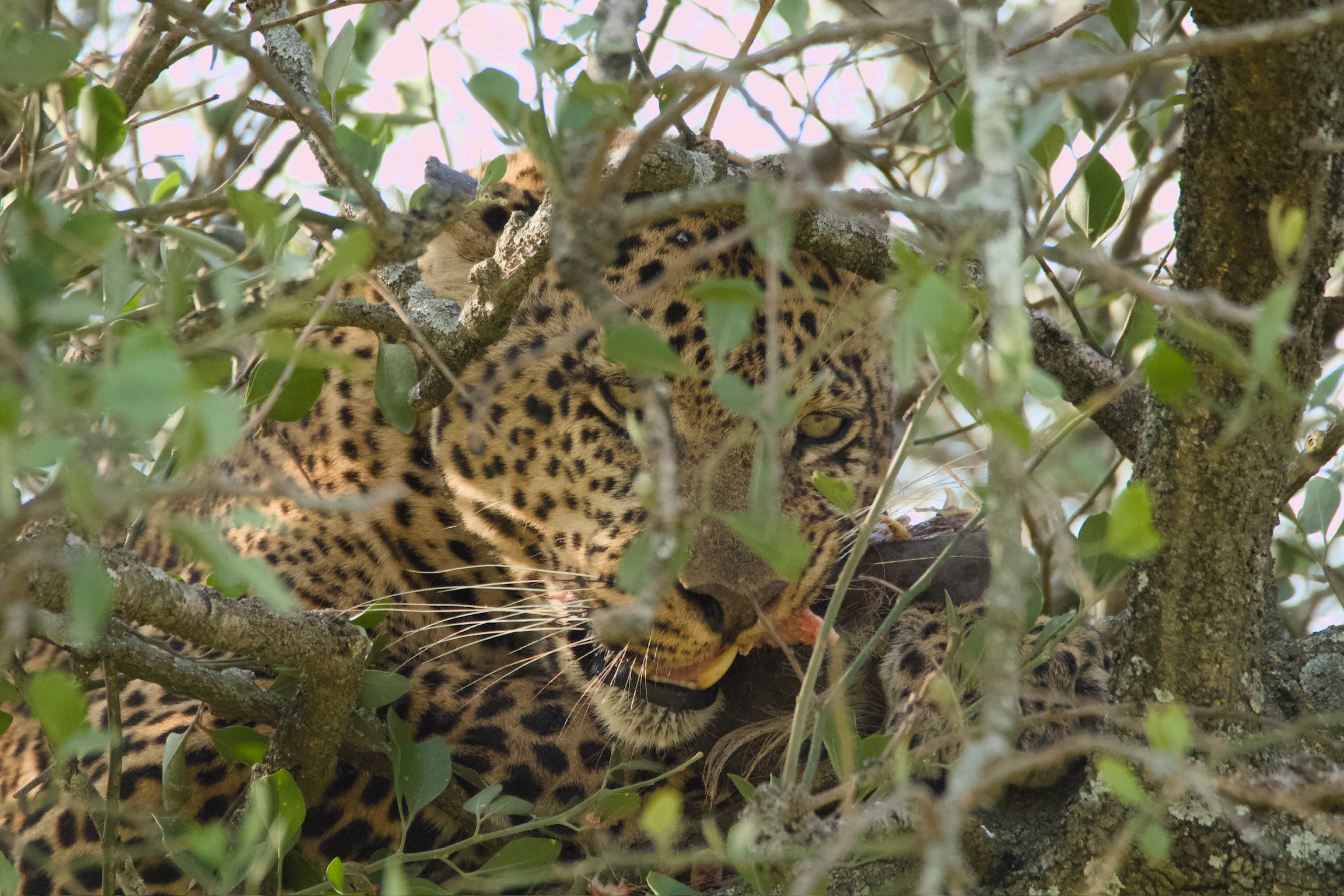
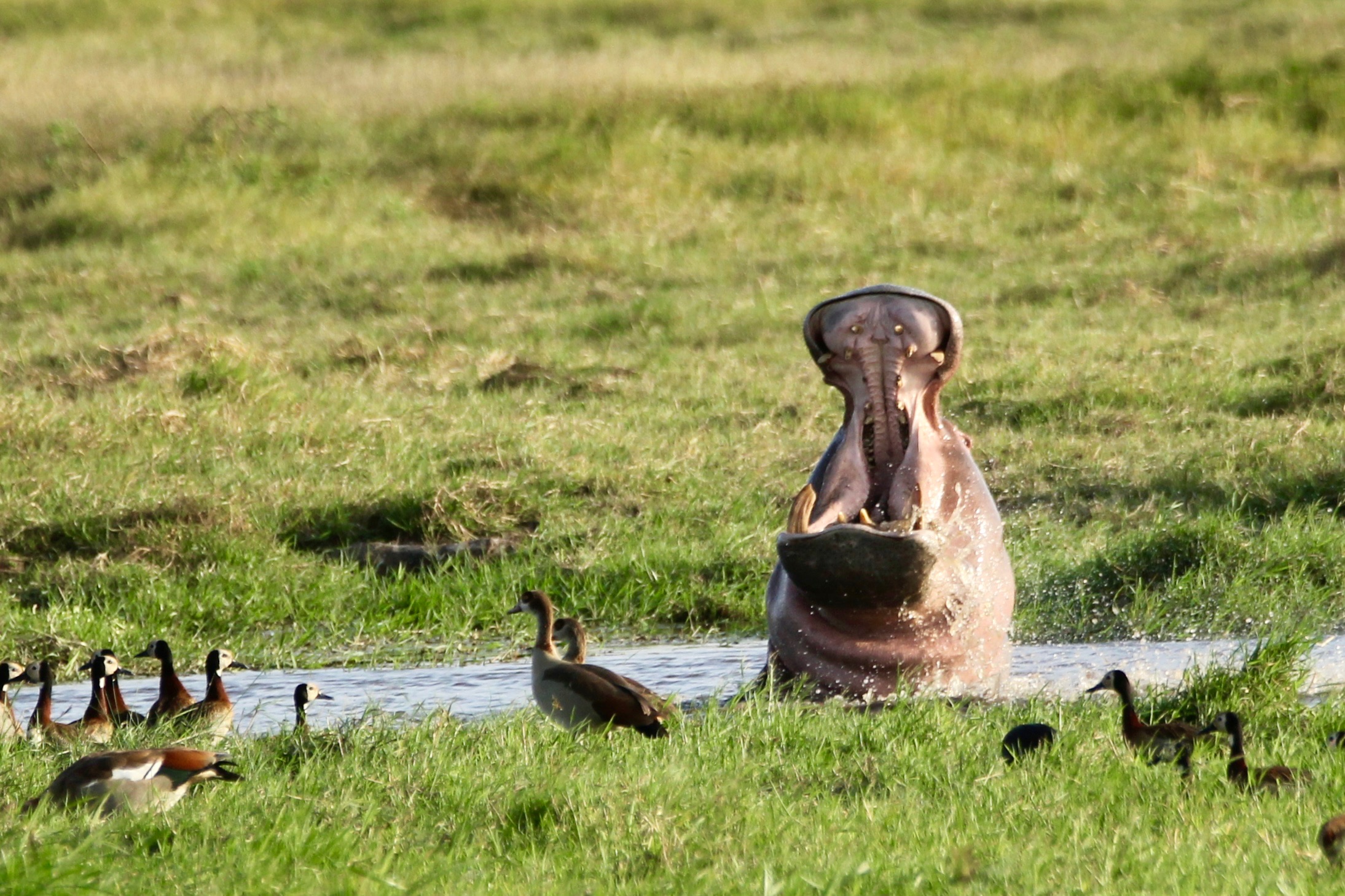
Lilli, with her rented lens, was able to get these prize pictures of the reclusive leopard and a hungry hippo:
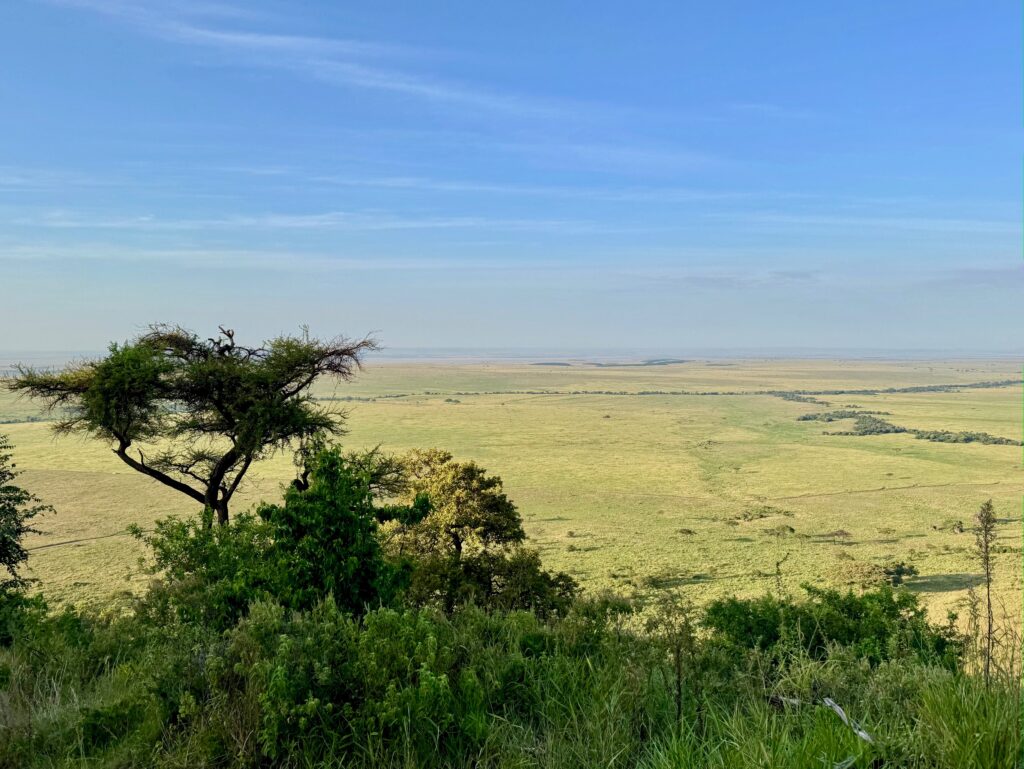
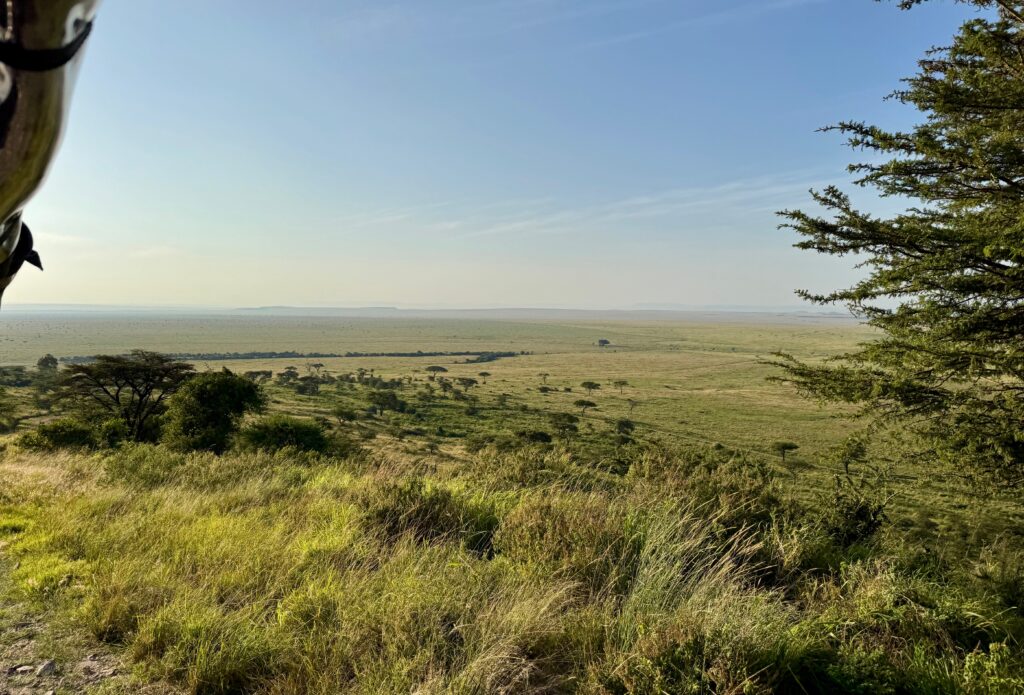
We stayed three nights at the Mara Engai Lodge in Masai Mara National Reserve. It was lovely but its location on the western ridge of the Rift Valley was somewhat challenging. Our Cruisers parked halfway up and gave us over to the Lodge’s specially made climbing cars. But look at these views from the ridge of the Valley!
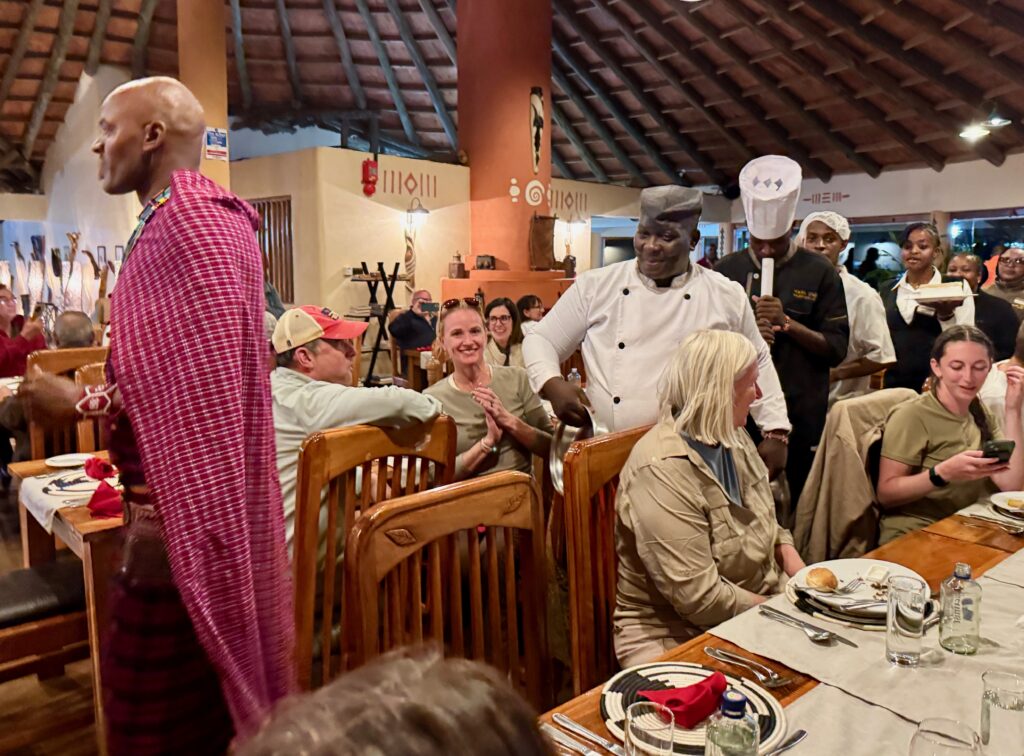
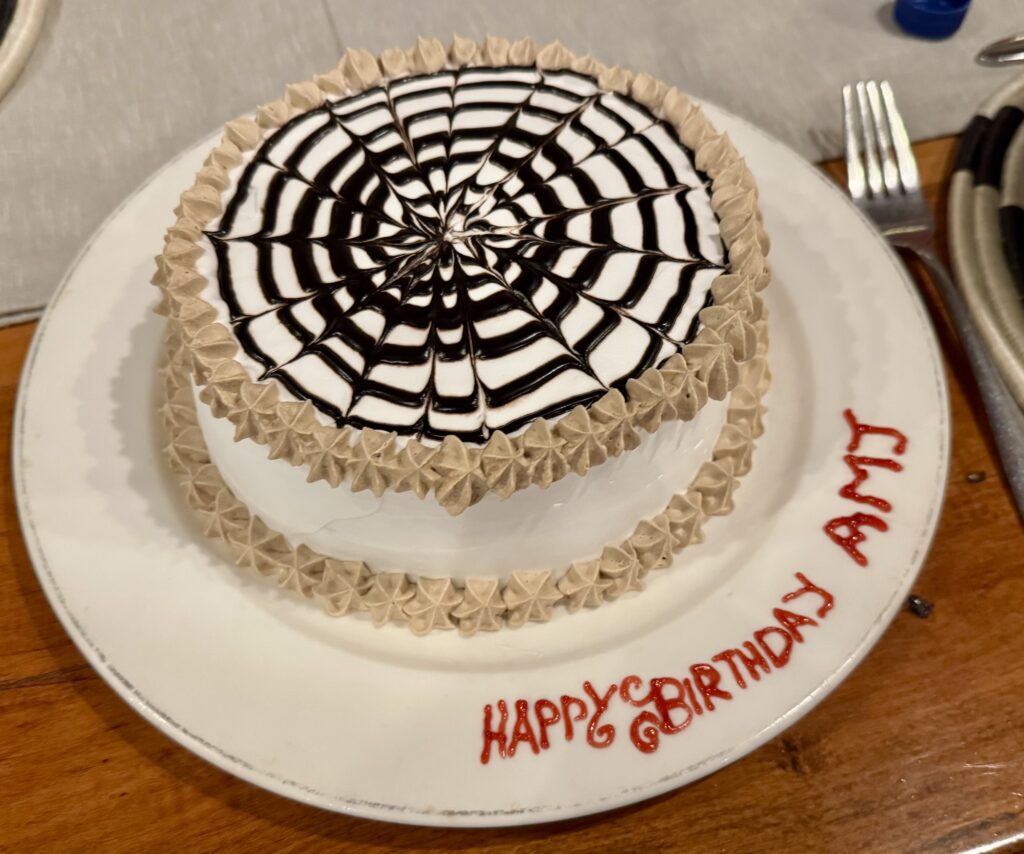
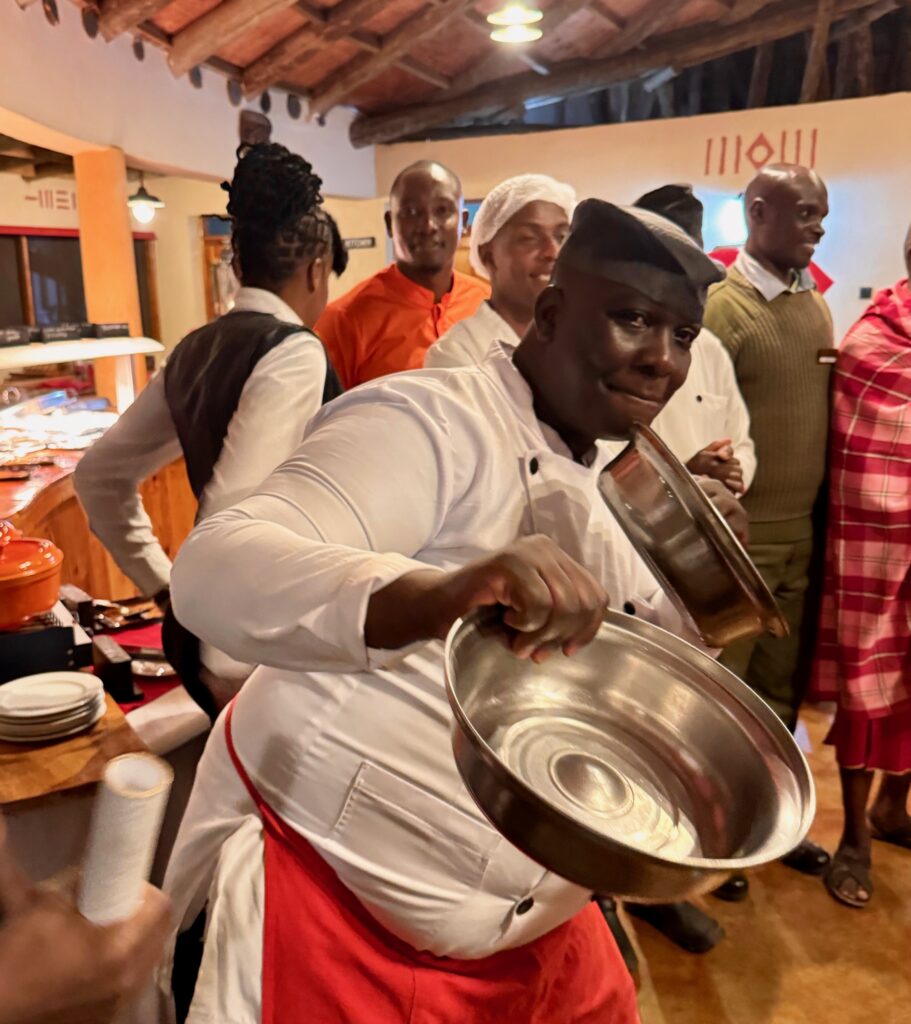
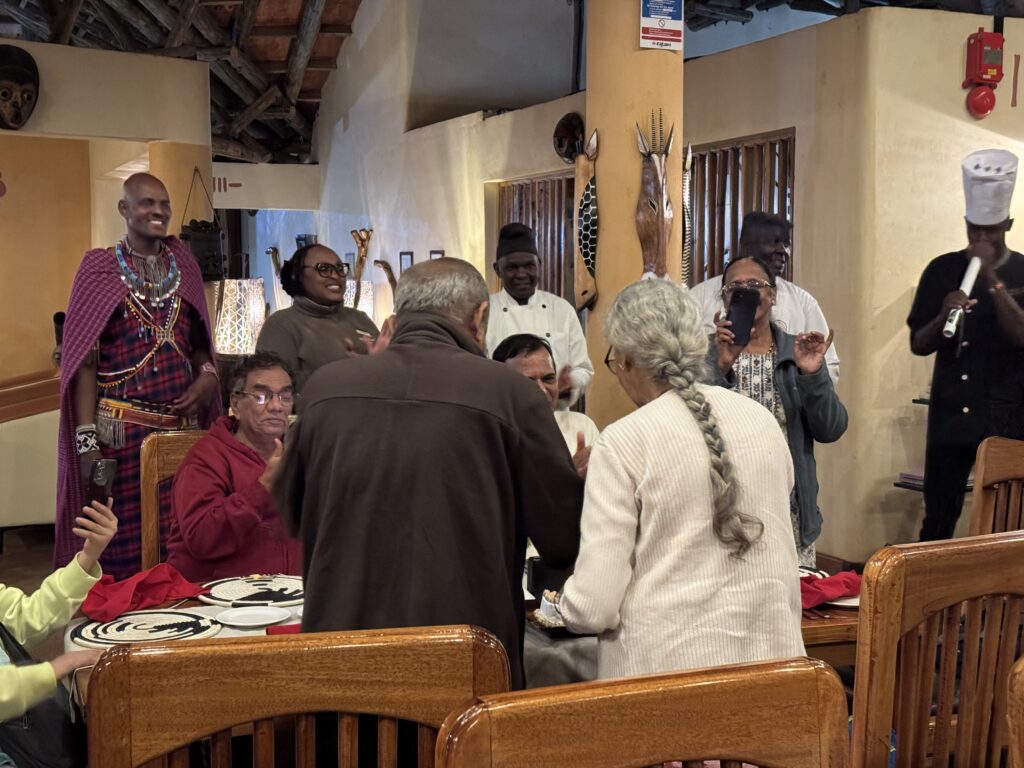
Mara Engai Lodge helped us celebrate Amy Colaco’s birthday on June 25 with a lively parade.
On June 28, we bid farewell to the Colaco family, who flew from a small airfield in Masai Mara to Nairobi to catch their flight home. Then we bid our guides farewell and flew in two planes that seated 12 each to Amboseli National Park near the base of Mount Kilimanjaro for our Post-Tour.
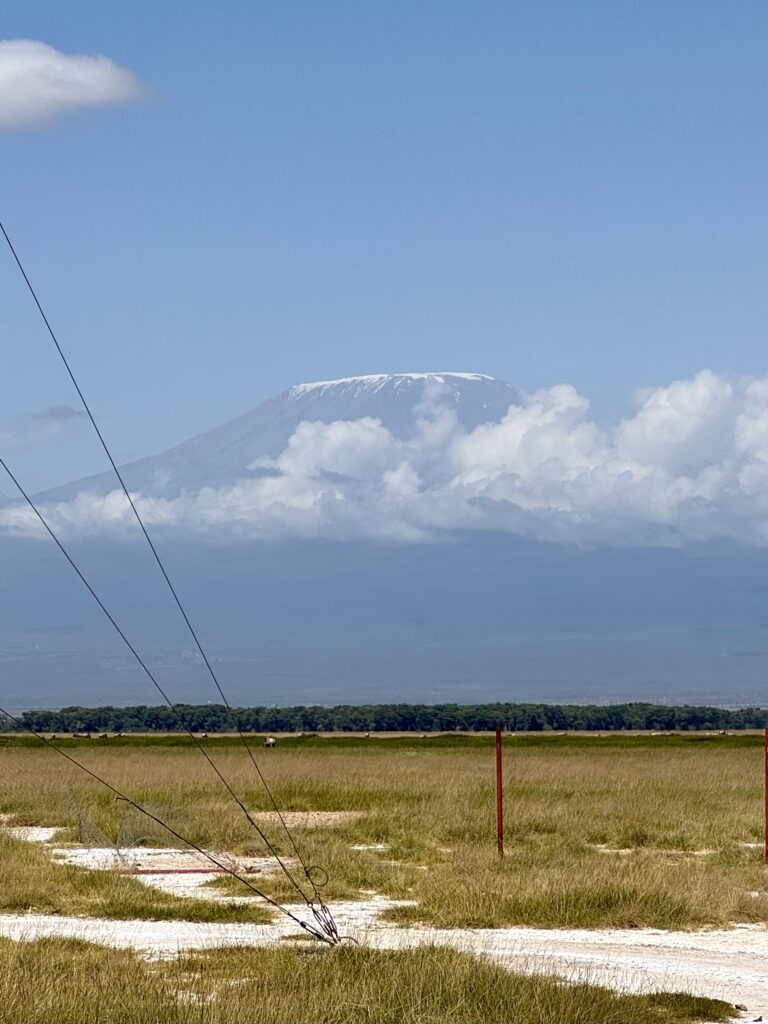
The trails in Amboseli were were bumpy; my phone recorded a record number of steps and stairs;
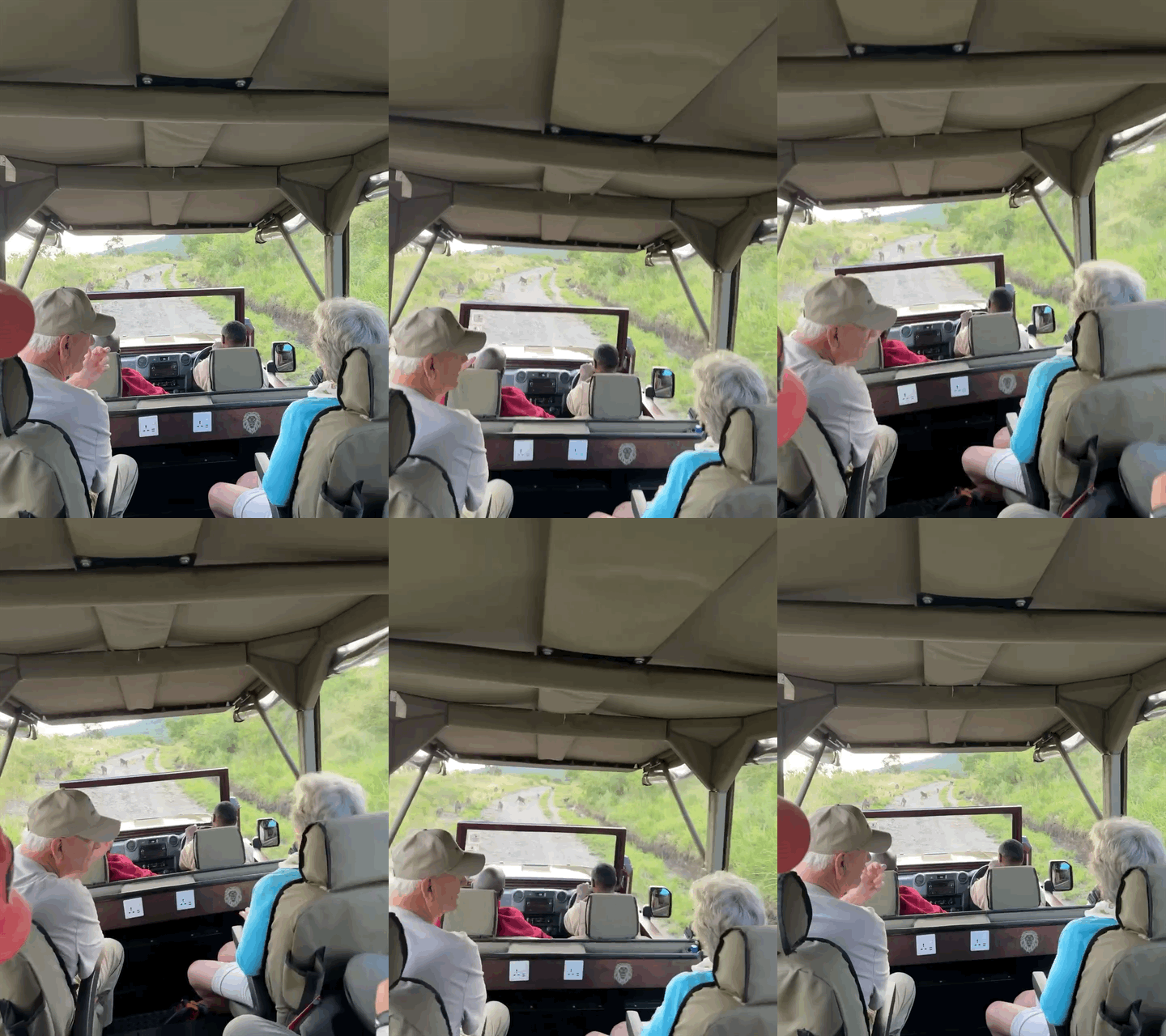
It looks like the Parents had a calmer ride in their cruiser, but those roads were challenging!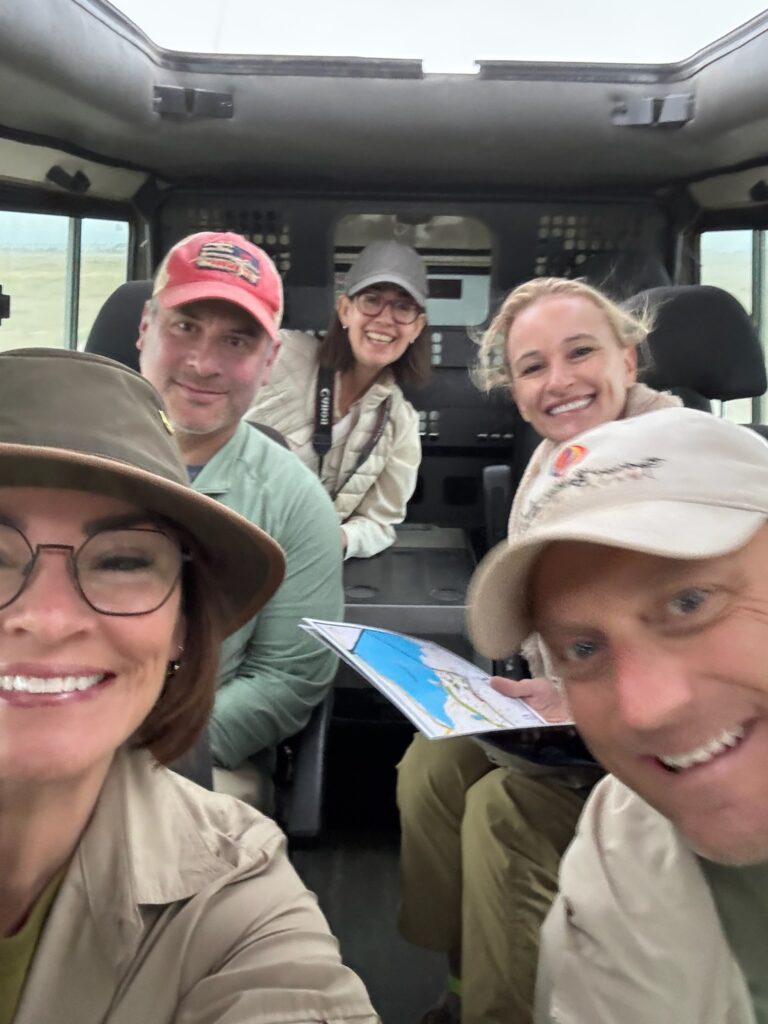
Many of us liked the Oltukai Lodge the best. Jay and Maxann, who had lived in Cairo in the 1970s, had a nice chat with Neveen ELTahri, a member of the Egyptian Parliament who was staying there, too.
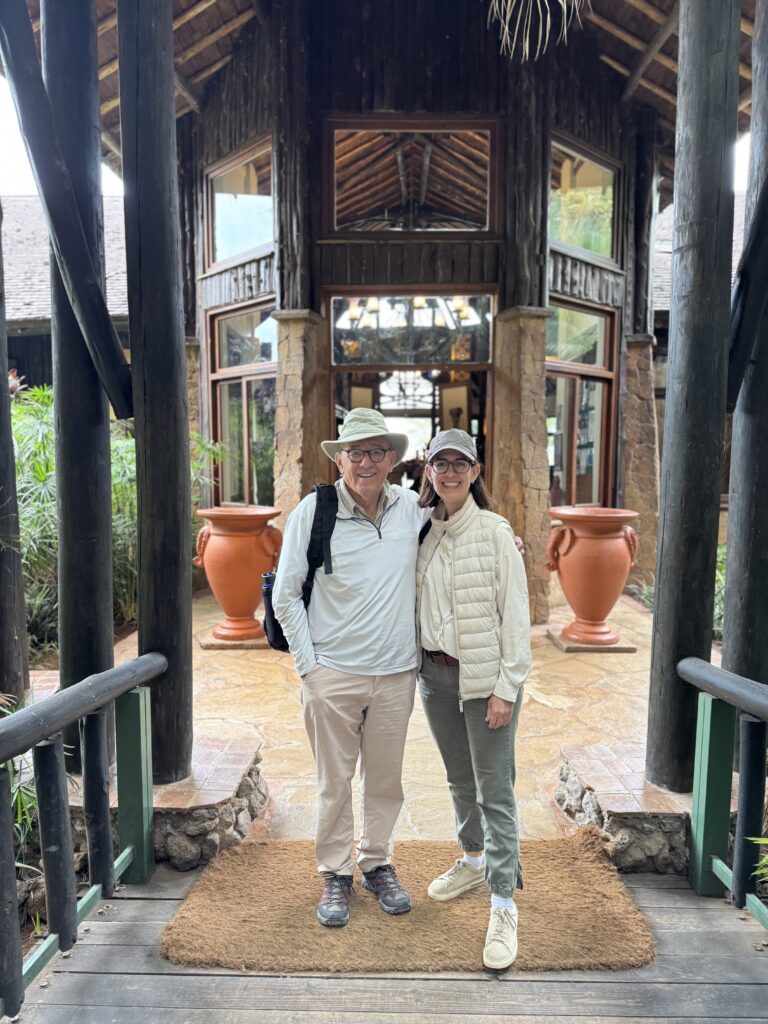
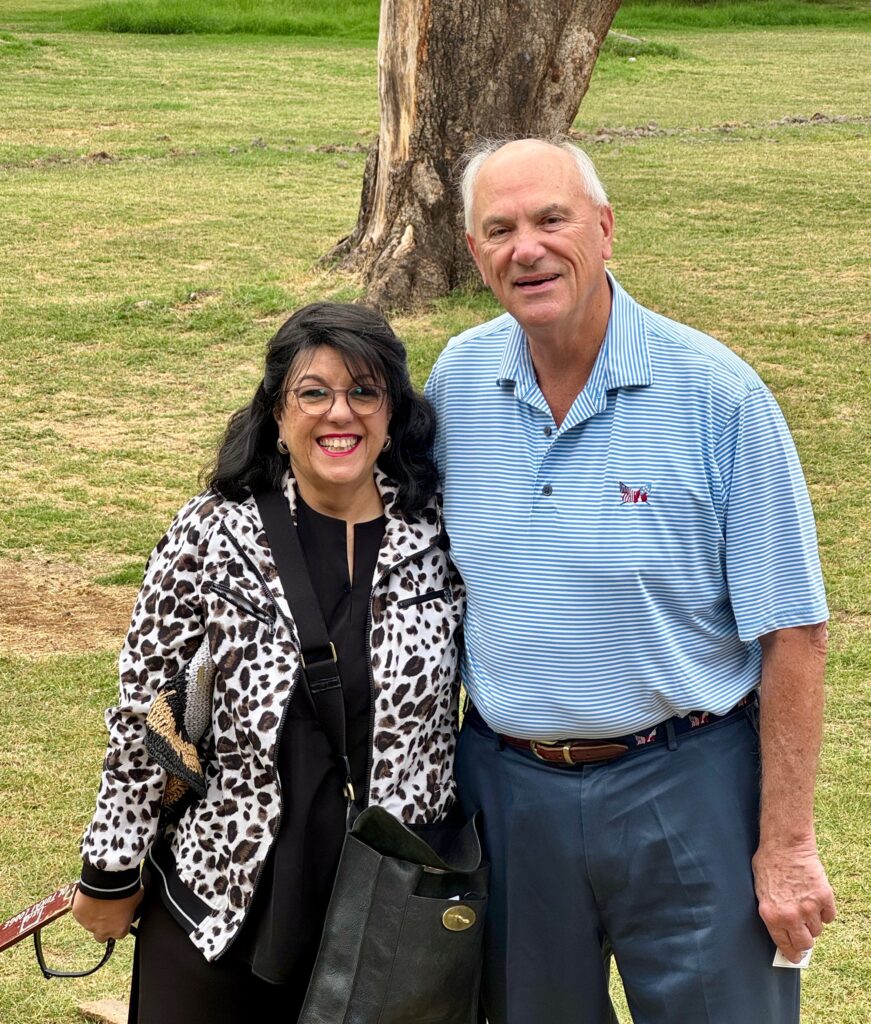
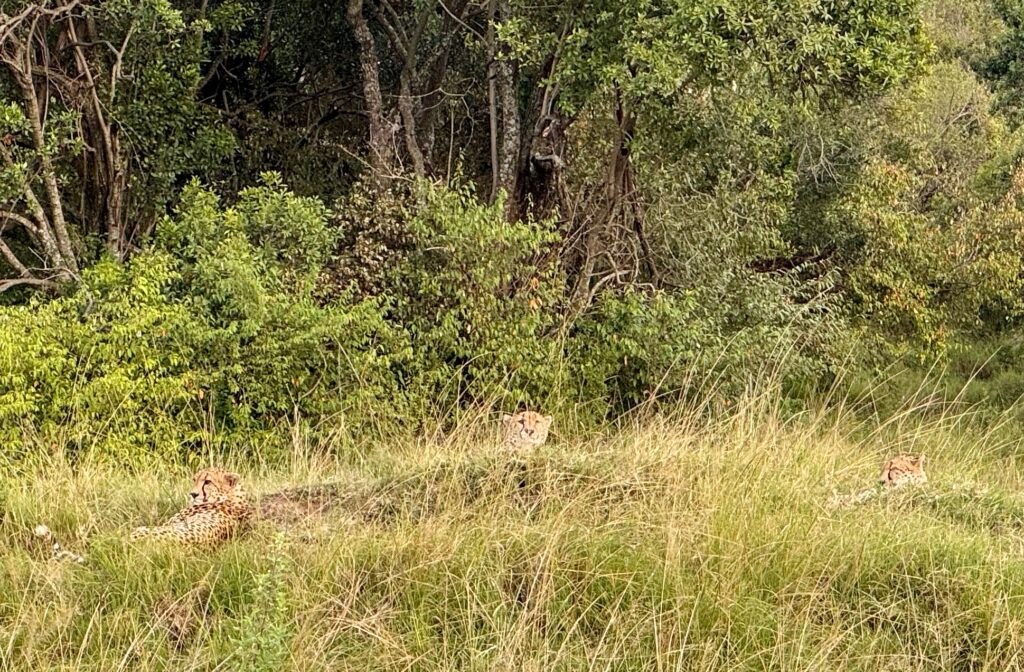
In Amboseli we finally located cheetahs, the most elusive of all the animals, after more long drives on bumpy roads. Can you spot them in this telephoto image?
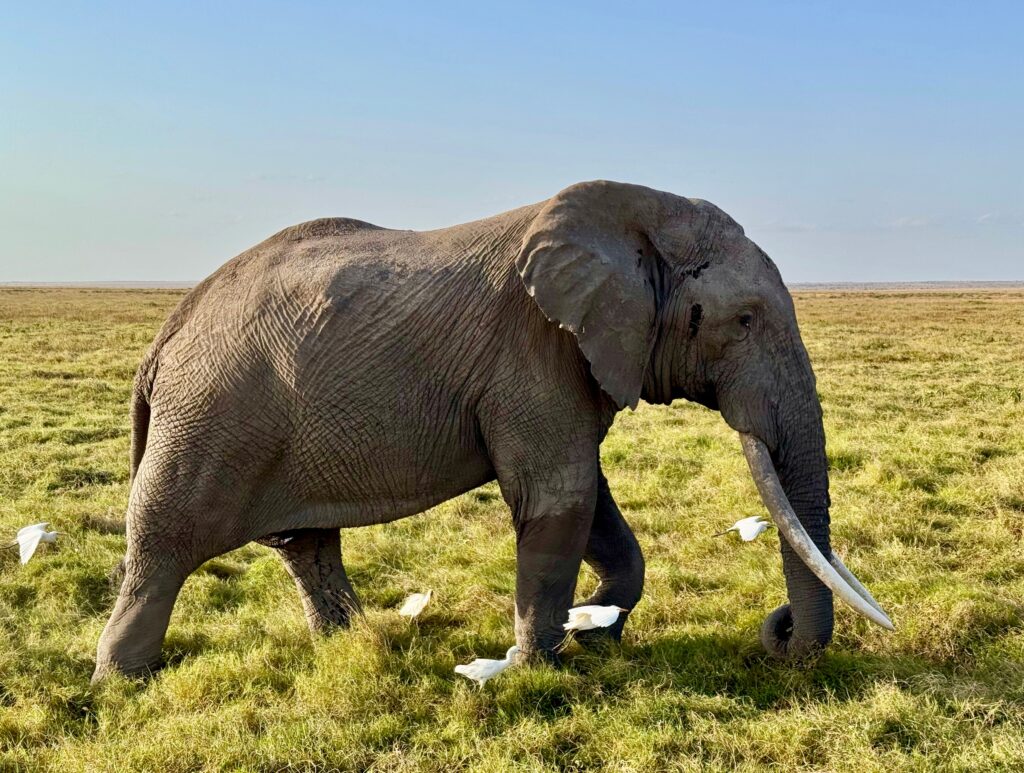
 It was fun to see the Common Zebras again, after learning how they differ from Grevy zebras, and to study how Grandma Elephants age gracefully, attended by friendly birds! Circle of Life!
For years the Maasai people shared the Amboseli National Park with the wild animals.They were pre-occupied with their own herds of cattle and seldom bothered the game, but in dry seasons there is insufficient pasture for game and cattle. On our last day, we visited a village in the Park and saw that they have mainly sheep and goats. The villagers gave us a very warm welcome, showed us their small, dark, mud-brick dwellings, and encouraged us to buy their necklaces and souvenirs. It was a joyous ending to our safari.
After nine wonder-full days in Kenya, we embarked on our long flights back to the United States on June 29. Steve and I picked up our car at David’s house in Coral Gables on the afternoon of the 30th, drove home, and quickly sank in bed. Many thanks to all for being such lively, interesting and accommodating fellow travelers, and especially to Jay for his calm, insightful, and caring leadership. With gratitude for our amazing world, I feel like I’ve been to the Garden of Eden and back!
Post script after a week back home: Steve and I watched the 1985 movie, Out of Africa, referred to above. Then, at Lilli’s suggestion, I borrowed Circling the Sun, a 2015 novel by Paul McLain, from my local library. Both the movie and the book have extended our safari experience and helped me remember all the beauty and many of the challenges.

Leave a Reply to Bailee Collins Cancel reply